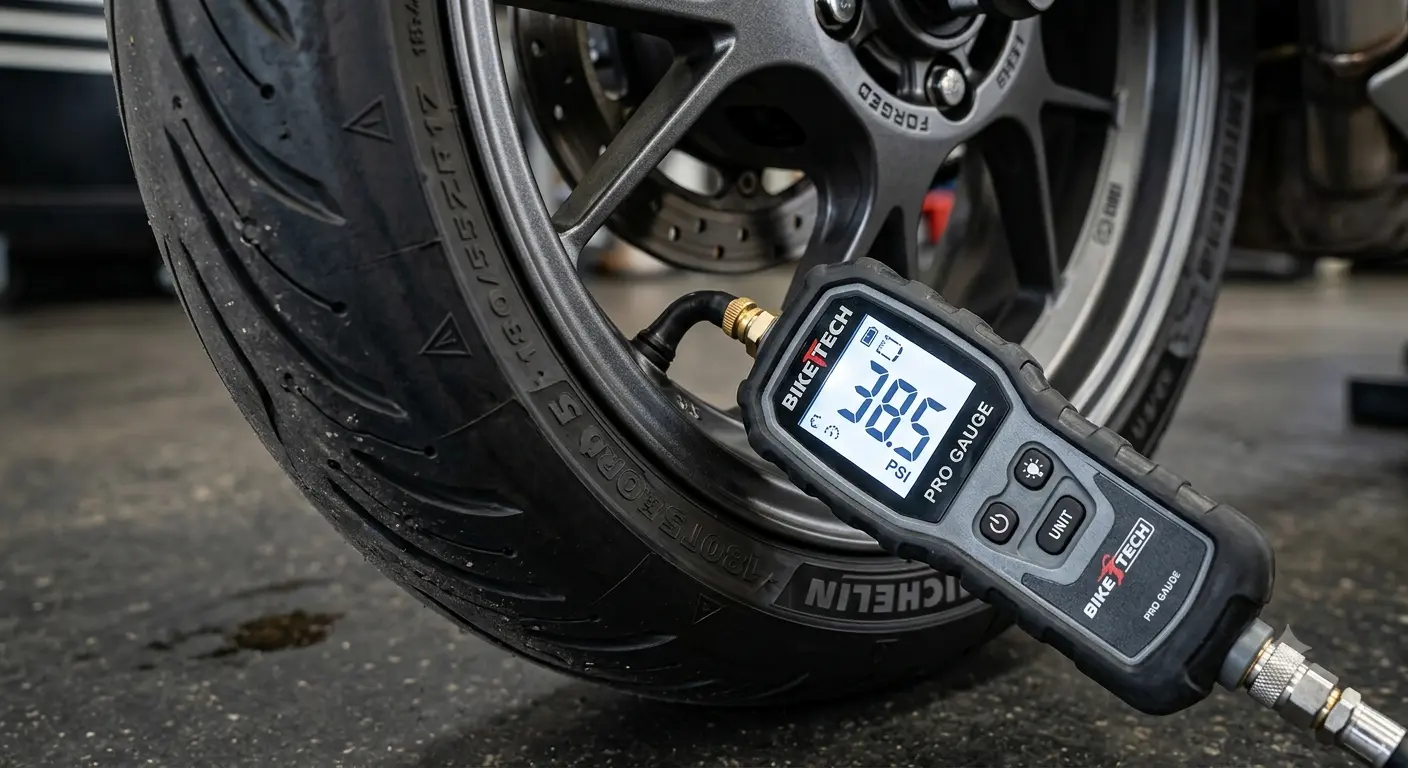
Motorcycle Tire Pressure Guide
Incorrect tire pressure compromises traction and accelerates rubber wear.
Checking your PSI regularly is the easiest way to ensure a safe, predictable ride.
The Contact PatchYour tires are the only components connecting your motorcycle to the asphalt.
Introduction
The total area of rubber touching the road—the contact patch—is remarkably small.
Operating with improper inflation limits your suspension’s efficiency and alters your bike’s handling.
This ultra-concise guide provides the core technical steps to monitor and maintain your motorcycle tire pressure accurately.
The Three Maintenance Rules for Tire PSITo achieve maximum safety and tire longevity, follow this straightforward protocol:
Check Cold
Always measure tire pressure before your ride, when the tires are cold. Riding heats up the internal air, causing expanding pressure readings that reflect false numbers.
Inspect Weekly
Tires naturally lose around 1 to 2 PSI every month due to rubber porosity. Use a dedicated, calibrated digital pressure gauge weekly.
Match the Manual
Never use the maximum pressure number stamped on the tire sidewall for daily riding.
Instead, always look at the official swingarm sticker or your owner’s manual for the correct front and rear specifications.
Conclusion
Small Numbers, Massive SafetyMaintaining correct tire pressure guarantees optimal lean angles, shorter braking distances, and stable highway cruising.
Taking sixty seconds to check your PSI before starting the engine shields you from unexpected failures.
Respect the physics.
Maintain the pressure.
Ride prepared.
[Disclaimer: This article is provided for informational and educational purposes only.
Tire pressure specifications vary significantly based on motorcycle weight, passenger presence, cargo load, and rubber manufacturer guidelines.
Always consult your motorcycle’s official owner manual or specific tire manufacturer documentation before adjusting pressure levels, and check your valve stems regularly for leaks.]
References & Sources
* Motorcycle Safety Foundation (MSF) — Tire Care and Inflation Safety — msf-usa.org
* Tire Industry Association (TIA) — Motorcycle Rubber Pressure Doctrine — tireindustry.org
* National Highway Traffic Safety Administration — Vehicle Tire Safety Standards — nhtsa.gov
Enjoyed This Guide? Explore More Virginia Riding Resources:
If you found this article helpful, dive deeper into our top-recommended guides to stay safe, well-equipped, and ready for your next Appalachian adventure:
- State Legal Rules & Safety Regulations: Stay fully compliant on state highways with our updated overview of Virginia motorcycle laws 2026 helmets lane splitting and regulations (https://motorcyclevirginia.com/virginia-state-motorcycle-laws-2026-helmets-lane-splitting-and-regulations/).
- Technical Mountain Routes: Tackle 320 sharp switchbacks across Southwest Virginia using our Virginia State Route 16 complete riding guide to the Back of the Dragon (https://motorcyclevirginia.com/virginia-state-route-16-riding-guide-back-of-the-dragon/).
- Long-Distance Trip Prep: Ensure your bike is 100% mechanically prepped before heading out with how to prepare your motorcycle for long-distance touring (https://motorcyclevirginia.com/how-to-prepare-your-motorcycle-for-long-distance-touring/).
- DIY Brake & Safety Maintenance: Keep your stopping power at peak performance with our hands-on guide to motorcycle brake pad replacement DIY step-by-step maintenance (https://motorcyclevirginia.com/motorcycle-brake-pad-replacement-diy-step-by-step-maintenance/).
- Group Intercom Tech Reviews: Upgrade your helmet comms for group rides by comparing Cardo vs Sena choosing the best motorcycle intercom for group rides (https://motorcyclevirginia.com/cardo-vs-sena-choosing-the-best-motorcycle-intercom-for-group-rides/).
Leave a Reply