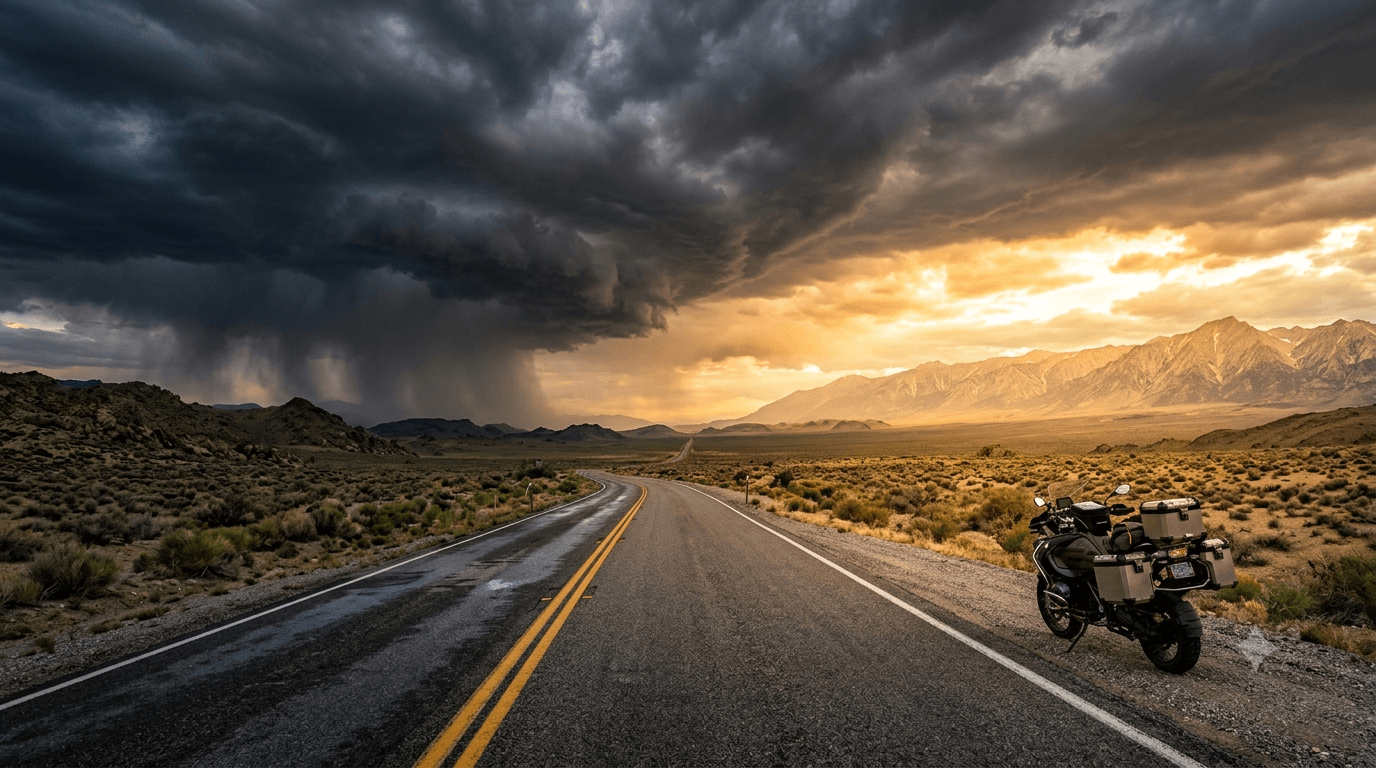
Most riders fear the storm but the prepared rider respects it — and rides through it safely.
Weather Shifts Can Happen Anytime — Stay ReadyWeather shifts can happen at any moment on the open road.
When clear skies suddenly turn into severe conditions, being prepared with the right safety knowledge is exactly what keeps you secure and in control.
This concise guide covers how to handle extreme heat, rain, and strong crosswinds confidently.(Riding Through Sudden Storms)
1. Riding in Extreme Heat
Heat is a silent hazard that causes rapid fatigue, dangerous dehydration, and sudden tire pressure spikes.
How to Ride Safely in the Heat:* Hydrate Constantly: Drink 500ml of water before departing, and stop every 45-60 minutes to drink more.
* Wear Protective Mesh: Use light-colored, ventilated mesh gear.
Never drop protection for comfort; riding in a t-shirt is a massive safety risk.
* Monitor Your Engine: In heavy traffic, pull over and idle in the shade if your engine temperature spikes.
* Time Your Ride: Plan long summer trips for early morning or late afternoon to avoid the mid-day sun.
2. Riding in Rain:
Rain severely cuts tire traction and visibility.
The first 15 to 30 minutes are the most dangerous, as water mixes with road oil and dust to create an incredibly slick film.
How to Ride Safely in the Rain:
* Slow Down: Drop your speed and double your following distance. Wet braking distances are 30% to 40% longer.
* Avoid Road Hazards: Stay clear of painted road markings, manhole covers, and tar snakes—they become slick as ice.
* Follow Car Tracks: Ride in the visible tracks left by car tires; these paths are partially cleared of standing water.
* Brake Progressively: Apply brakes gently and smoothly to prevent wheel lockup.
If you have ABS, rely on it without jamming the levers.
3. Riding in Strong Crosswinds
Wind is unpredictable and hits hardest on open bridges, elevated highways, or when passing gaps in highway barriers and overtaking large semi-trucks.
How to Ride Safely in Strong Winds:
* Relax Your Grip: Keep your arms loose.
A stiff grip transfers wind force directly into the steering, destabilizing the bike.
* Lean and Counter: Gently lean the motorcycle into the prevailing wind to maintain your lane position.
* Manage Truck Passing: Expect a sudden push away from a truck as you approach, a pull toward it alongside, and another push as you clear it. Maintain steady throttle.
* Know When to Pull Over: If holding your lane requires exhausting physical effort, park safely and wait out the gusts.
4. Universal Weather Principles:
No matter what the sky looks like, these three core rules never change:
1. Full Gear, Every Ride: A full-face helmet, armored jacket, gloves, and riding boots are non-negotiable.
2. Route Planning: Check forecasts for your entire route, not just the destination.
3. Arriving Alive Matters Most: There is no shame in pulling over.
A rider who waits out a storm makes the right call every time.Conclusion: Preparation Over PanicAdverse weather is a challenge to be managed, not feared.
With the right gear, smooth technical inputs, and a calm mindset, you can handle unexpected shifts and arrive safely at your destination.Respect the road.
Understand the elements.
Ride prepared.References & Sources
* Motorcycle Safety Foundation (MSF) — msf-usa.org
* National Highway Traffic Safety Administration (NHTSA) — nhtsa.gov
* American Motorcyclist Association (AMA) — americanmotorcyclist.com
* Transport Research Laboratory (TRL), UK — trl.co.uk
[Disclaimer: This article is provided for informational and educational purposes only. Riding conditions vary significantly by region, season, and individual experience level. Always exercise personal judgment, consult your motorcycle’s owner manual, and consider professional riding instruction before riding in conditions beyond your current skill level.]
Leave a Reply