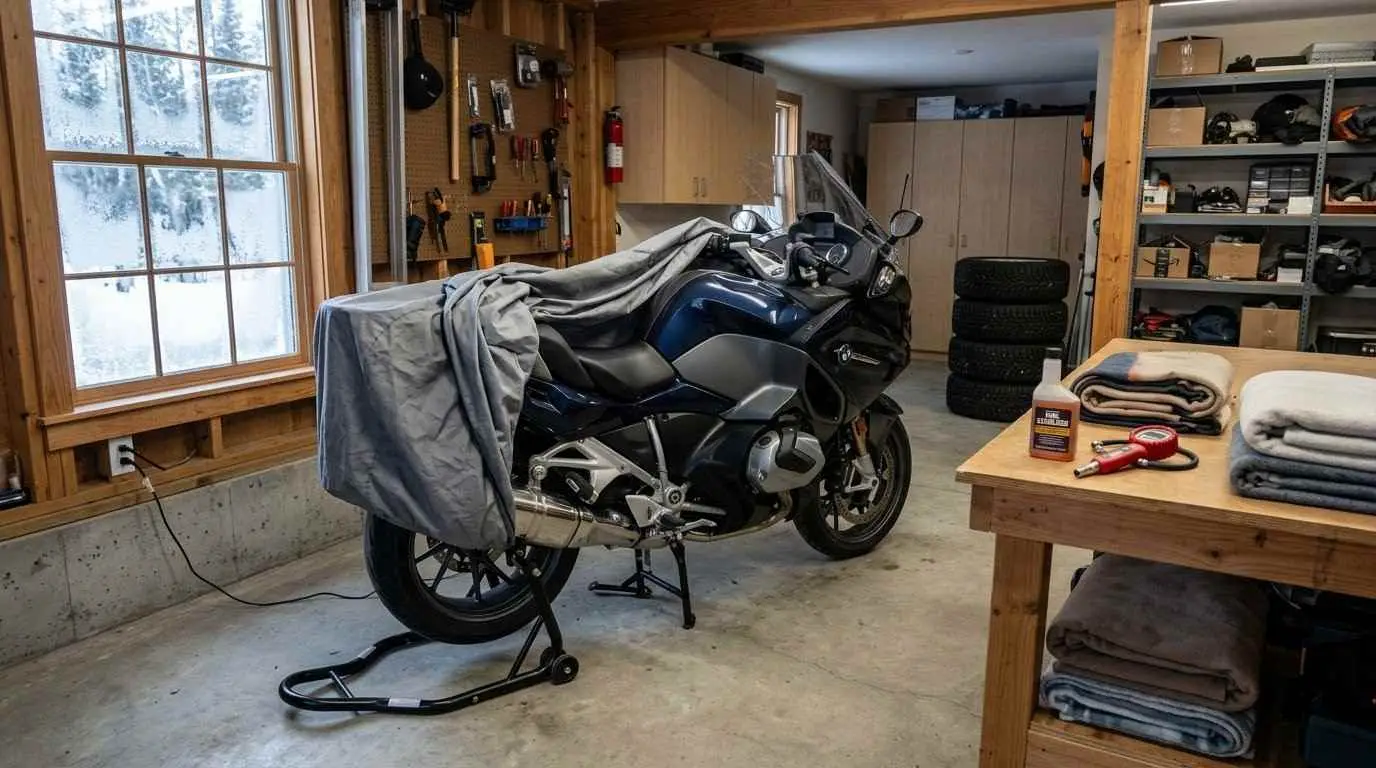
Prepare your bike for cold weather with our ultimate motorcycle winterization guide. Discover essential storage hacks for battery care, fuel, and tires.
Leaving a motorcycle sitting idle without proper preparation invites mechanical damage. Cold weather and stagnation are the ultimate enemies of vital bike components.
Introduction:
The Cost of StagnationWinter storage is more than just parking your motorcycle in a garage and throwing a blanket over it.
Moisture, fuel degradation, and battery drain can turn a perfectly running machine into an expensive mechanical nightmare by spring. Taking preventive steps before storage ensures your engine fires up instantly when the riding season returns.
This concise, practical guide provides the essential technical blueprint to protect your motorcycle during the winter months.
Fuel System Preservation:
Stabilize the TankFuel begins to degrade and oxidize in as little as 30 days. Untreated gasoline turns into a gummy varnish that clogs fuel injectors, carburetors, and fuel pump screens.Follow this strict fuel maintenance routine before long-term storage:
* Fill it Up: Fill your fuel tank to roughly 95% capacity with high-quality fuel. This minimizes the pocket of air inside the tank, preventing condensation and rust formation on the interior metal walls.* Add Stabilizer: Pour a dedicated fuel stabilizer directly into the tank according to the manufacturer’s dosage guidelines.
* Run the Engine: Start the motorcycle and let it idle for 5 to 10 minutes. This ensures the treated fuel fully circulates through the entire fuel delivery system, injectors, and fuel lines.
Electrical Defense:
The Smart Charger StrategyA motorcycle battery naturally loses its electrical charge over time when sitting idle.
Continuous parasitic draw from digital clocks or security alarms will completely drain a battery within weeks, leading to cell damage and permanent failure.
Never leave a dead battery in freezing temperatures, as the internal fluids can freeze and crack the plastic casing.
The most effective electrical defense is to connect a dedicated smart battery tender or trickle charger to the battery terminals.
A smart charger monitors voltage levels and automatically delivers a micro-charge only when needed, maintaining optimal battery health without overcharging.
Engine Protection:
Fresh Oil and Corrosion ControlUsed engine oil contains acidic contaminants and combustion byproducts accumulated during regular riding.
If left inside the engine for months, these acids settle and chemically attack internal engine bearings and polished metal surfaces.
Always change your oil and filter immediately before putting the bike into winter storage.
Fresh, clean oil provides a protective chemical coat that shields critical internal engine components from rust.
Additionally, blocking the exhaust pipe exit with a clean, oily rag prevents ambient moisture and small pests from entering the engine valves during long months of storage.
Tire Care:
Preventing Flat SpotsWhen a heavy motorcycle stands completely still on cold concrete for months, the constant downward pressure distorts the tire carcass.
This causes permanent structural warping known as “flat spotting,” which creates dangerous vibrations once you ride again.
To protect your tires, inflate them to the maximum recommended cold pressure rating printed on the sidewall.
The best solution is to lift the motorcycle entirely off the ground using front and rear paddock stands, removing all weight from the rubber.
If stands are not available, place thick pieces of wood or cardboard beneath the tires to insulate the rubber from the freezing concrete floor.
Conclusion:
Prepare Now, Ride LaterA few minutes of careful maintenance in the fall saves hundreds of dollars in mechanical repairs in the spring.
By stabilizing your fuel, managing battery voltage, and protecting your tires, you preserve your motorcycle’s value and performance.
Respect the physics.
Protect the machine.
Ride prepared.
[Disclaimer: This article is provided for informational and educational purposes only. Winterization requirements and procedures vary significantly by motorcycle make, engine type (carbureted vs. fuel-injected), and regional climate conditions. Always consult your motorcycle’s official owner manual for specific storage instructions and safety guidelines, or seek certified mechanical service for technical maintenance.]
References & Sources
* Motorcycle Safety Foundation (MSF) — Comprehensive Guide to Long-Term Storage — msf-usa.org
* American Motorcyclist Association (AMA) — Winter Maintenance and Fuel Prep Doctrine — americanmotorcyclist.com
* Battery Council International — Safety Standards for Power Sports Batteries — batterycouncil.org
Leave a Reply