Pack a motorcycle : The Long-Haul Blueprint
Essential Motorcycle Packing Hacks for Multi-Day TripsA poorly packed motorcycle is a safety hazard.
Mastering weight distribution is the difference between a smooth tour and a dangerous ride.
Introduction:
The Physics of Two-Wheel LuggagePacking for a multi-day motorcycle road trip is completely different from throwing bags into the trunk of a car. On a motorcycle, every single pound you add directly impacts how the bike accelerates, brakes, and leans into corners.
Overloading your machine or placing weight in the wrong zone can cause high-speed instability and severe handling issues.
This concise, technical guide breaks down the essential structural principles and packing hacks needed to keep your motorcycle balanced, protected, and ready for long-distance touring.
The Center of Gravity:
Physics of Weight DistributionThe absolute golden rule of motorcycle touring is to keep your center of gravity as low and as central as possible. Heavy cargo placed too high or too far back behind the rear axle will unweight the front tire, causing dangerous speed wobbles (tank-slappers).
To distribute weight correctly, follow these three structural placement rules:
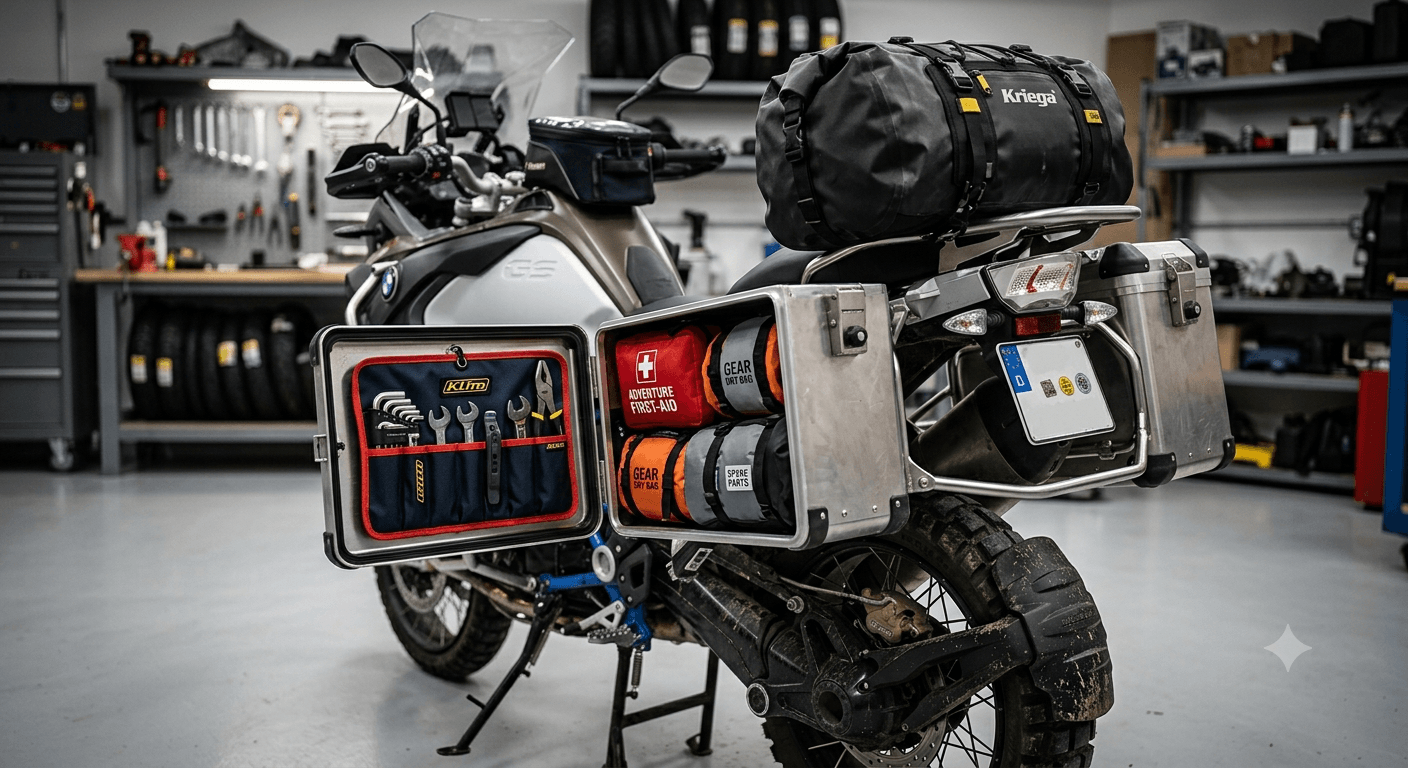
* Heavy Items First: Place your heaviest gear—such as mechanical tools, spare parts, and dense equipment—at the very bottom of your side panniers or saddlebags.
* Keep it Central: Push the heaviest objects as far forward as possible, closer to the rider’s seat, to keep the mass tight against the motorcycle’s natural center of gravity.
* Balance the Sides: Always use a portable scale or gauge to ensure your left and right saddlebags weigh roughly the same. An uneven side-to-side load forces you to constantly counteract the pull while riding straight.
Soft vs Hard Luggage:
Choosing Your Structural SetupSelecting the right luggage system determines how your bike handles wind resistance and terrain vibration during long-haul trips:
* Hard Luggage (Aluminum/Plastic Cases): Excellent for secure locking, absolute weatherproofing, and structural protection in case the bike falls over. They are best suited for paved highway touring and long-distance adventure riding.
* Soft Luggage (Textile/Roll Bags): Extremely lightweight, highly flexible, and safer for off-road riding because they don’t crush limbs during a slide. However, they require external straps and offer less security against theft when parked.
Waterproofing Standards:
Protecting Vital ElectronicsHigh-speed riding through heavy rain forces moisture into zippers and seams that would normally stay dry in a standard rainstorm.
Protecting your electronics, documents, and spare clothing requires systematic layering.
Never trust “water-resistant” zippers on your riding luggage.
Use dedicated dry bags with roll-top closures that meet strict IP (Ingress Protection) waterproof standards.
A highly effective packing hack is to line the inside of your primary saddlebags with heavy-duty contractor trash bags before packing your gear inside, creating an unbreakable double barrier against torrential downpours.
The “Access on Demand” Packing Strategy
An experienced touring rider never unpacks the entire motorcycle on the side of the highway just to find one small item.
Group your gear systematically by urgency.
Keep these high-priority items at the very top of your tank bag or tail bag for immediate, effortless access:
* A certified first-aid kit and emergency medical supplies.
* Heavy-duty rain gear and extra layers for sudden temperature drops.
* Basic mechanical roadside tools, tire tire plug kits, and a compact tire inflator.
* Hydration packs and quick-energy snacks.Conclusion: Pack Light, Ride FarThe ultimate packing hack is knowing what to leave behind. Excess weight strains your motorcycle’s suspension, wears out your tires faster, and decreases your fuel efficiency.
By mastering the physics of weight distribution and keeping your essential tools accessible, you guarantee a safe, stable, and highly enjoyable long-haul journey.
Respect the physics.
Pack structurally.
Ride prepared.
[Disclaimer: This article is provided for informational and educational purposes only. Motorcycle weight capacities, gross vehicle weight ratings (GVWR), and luggage handling characteristics vary significantly by manufacturer and specific model. Always consult your motorcycle’s official owner manual for weight limits, inspect mounting racks regularly, and test-ride the fully loaded motorcycle at low speeds before embarking on a long trip.]
References & Sources
* Motorcycle Safety Foundation (MSF) — Safe Riding and Cargo Loading Tips — msf-usa.org
* Iron Butt Association (IBA) — Long-Distance Motorcycle Packing Doctrine — ironbutt.org
* Adventure Cycling Association — Lightweight Touring and Load Management — adventurecycling.org
Leave a Reply