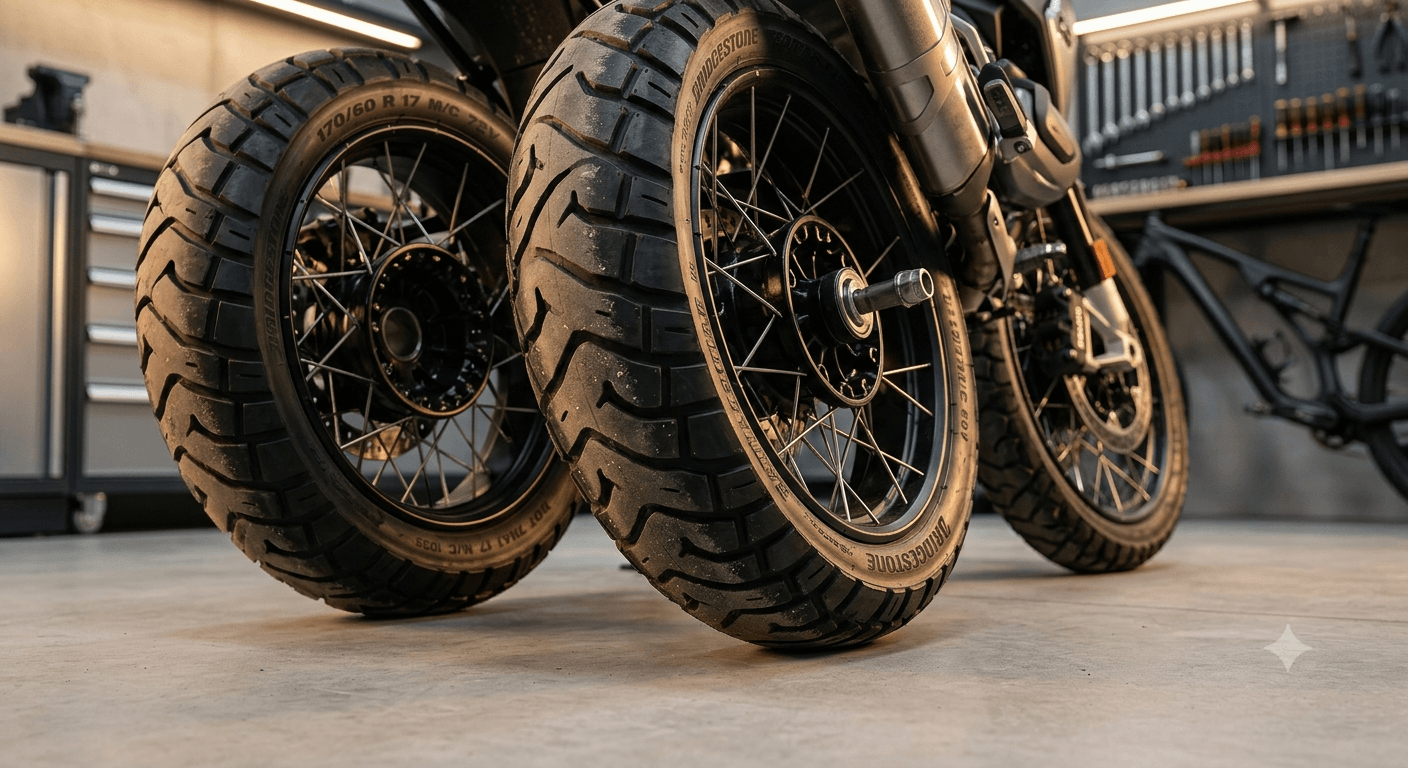
Most riders focus on the engine. The expert rider focuses on the tires — the only things keeping the bike glued to the asphalt.
motorcycle tire lifespan
Introduction:
Your Only Point of ContactWhen riding a motorcycle, your entire world relies on two small patches of rubber, each barely the size of a credit card. Every bit of braking, acceleration, and cornering forces passes through these contact patches.
Tire maintenance is not just a routine chore; it is the ultimate foundation of motorcycle safety.
This comprehensive, evergreen guide breaks down the technical rules of tire lifespan, cold inflation pressure, and wear detection so you can confidently manage your rubber for years to come.
How to Read Your Tire’s Age:
The DOT CodeTires degrade over time from environmental exposure, even if the motorcycle is parked in a garage and never driven.
Old rubber hardens, loses its chemical grip, and becomes prone to sudden delamination.
To find the true age of any tire, look at the sidewall for a stamped code starting with the letters “DOT.” At the end of this string, you will find a raised four-digit number:
* The first two digits represent the exact week of manufacture (from 01 to 52).
* The last two digits represent the year of manufacture.For example, a DOT code ending in “1225” means the tire was manufactured in the 12th week of the year 2025.
As a strict industry safety rule, any motorcycle tire that reaches 5 to 6 years of age should be replaced immediately, regardless of how much tread depth is left.
The Pressure Principle:
Cold vs. Hot InflationMaintaining correct tire pressure is the easiest and most critical safety action a rider can take.
Running a tire under-inflated causes the sidewalls to flex excessively, generating dangerous internal heat and ruining cornering stability.
Over-inflation reduces your contact patch, decreasing grip and causing a harsh ride.
Always check your tire pressure when the tires are completely “cold.” Cold pressure means the motorcycle has been parked for at least three hours, or has been ridden less than one mile.
Never release air from a tire immediately after a long highway ride.
Tires naturally spike in pressure as they heat up from road friction.
The manufacturer specs listed in your owner’s manual are calculated specifically for cold tires.
Reading the Tread:
Wear Indicators (TWI)Waiting until your motorcycle tires look completely smooth or bald is an incredibly dangerous mistake.
Riding on worn tires severely lowers water evacuation, making you highly vulnerable to hydroplaning in wet weather.
Modern motorcycle tires feature built-in safety checkpoints called Tread Wear Indicators (TWI).
These are small, raised rubber bars located deep inside the main tread grooves:
* Look for the tiny “TWI” letters or triangular arrows stamped on the outer sidewall edge.
* Look directly across the tire surface inside the grooves adjacent to those markers.
When the surrounding tread surface wears down to the exact same level as these internal rubber bars, the tire has reached its legal and safe limit (typically 2/32 of an inch remaining) and must be replaced immediately.
Touring vs Sport Compounds:
Choosing the Right RubberUnderstanding tire compounds is essential when investing in your next set of rubber.
The right choice depends entirely on your riding style and mileage requirements:
* Touring Tires: Built with hard rubber compounds in the center of the tread and softer compounds on the shoulders.
They are designed to resist squaring off during long highway miles while still offering secure grip when leaning into turns.
* Sport Tires: Engineered with soft, sticky rubber compounds throughout.
They heat up rapidly and provide immense cornering traction for aggressive track days, but wear out much quicker under straight-line highway touring.
Conclusion:
Respect the RubberEngines deliver power, but your tires deliver control. By regularly checking the DOT date codes, maintaining accurate cold pressure levels, and watching the tread wear indicators, you ensure your motorcycle responds perfectly to every input.
Respect the physics.
Monitor your rubber.
Ride prepared.
[Disclaimer: This article is provided for informational and educational purposes only. Tire performance, safety metrics, and wear rates vary significantly based on vehicle weight, terrain, weather, and riding styles. Always consult your motorcycle’s official owner manual, inspect tire conditions before every ride, and seek professional mechanical service for tire installations and inspections.]
References & Sources
* Motorcycle Safety Foundation (MSF) — Tire and Wheel Inspection Checklists — msf-usa.org
* National Highway Traffic Safety Administration (NHTSA) — Pneumatic Tire Safety and Standards — nhtsa.gov
* American Motorcyclist Association (AMA) — Street Riding Tire Maintenance Rules — americanmotorcyclist.com
Leave a Reply