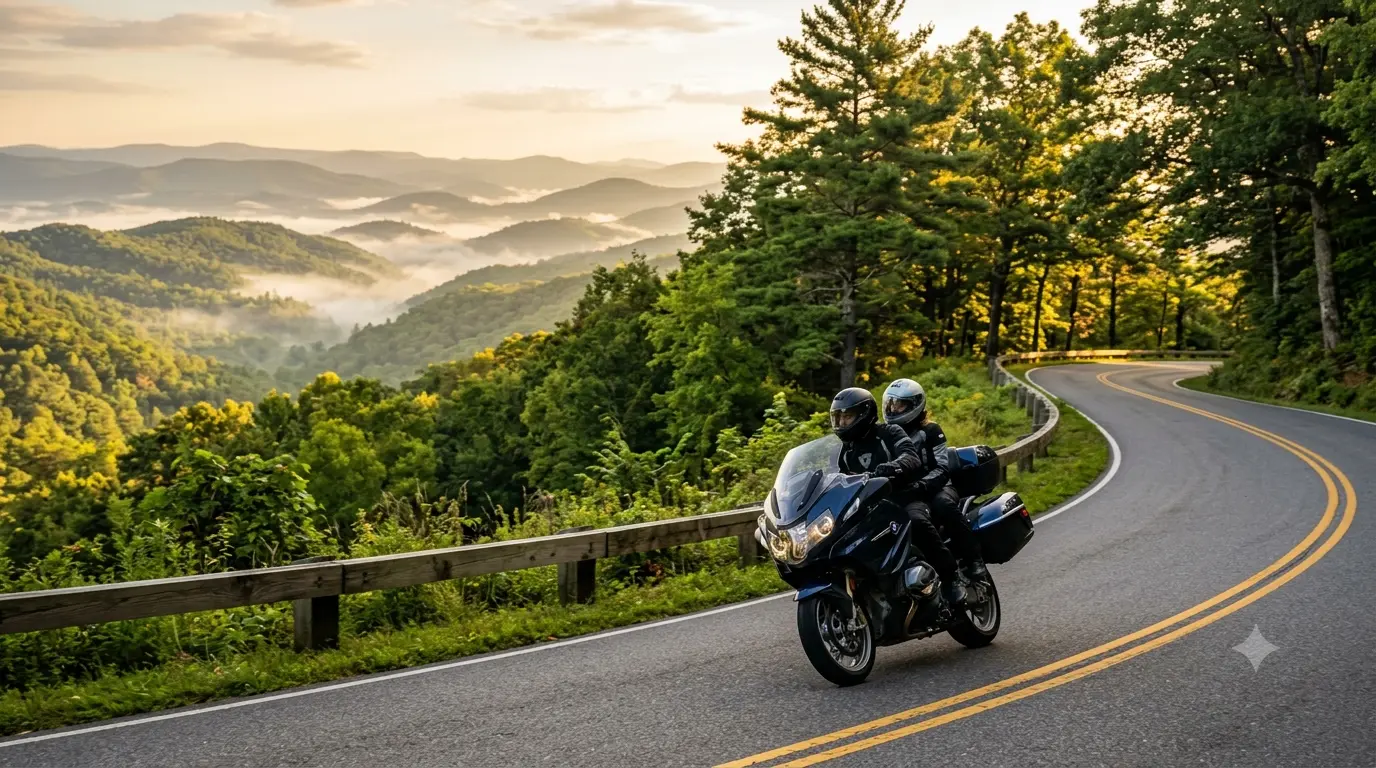
If you ride on two wheels, the Blue Ridge Parkway is not just another stretch of asphalt—it is an unforgettable journey through the heart of Virginia’s Appalachian Mountains. Known as “America’s Favorite Drive,” this scenic highway offers world-class riding conditions that every motorcycling enthusiast should experience at least once.
1. What Makes the Blue Ridge Parkway a Premier Riding Destination?
1.1. Unrivaled Scenic Views and Sweeping Curves:
The Parkway spans hundreds of miles without a single commercial vehicle or traffic light. This creates a continuous, fluid riding flow surrounded by lush mountain peaks, deep valleys, and forest canopy that changes color dramatically across the seasons.
1.2. Technical Riding and Elevation Changes:
Engineered specifically for recreational travel, the road features smooth, banked curves. However, riders must stay alert: sudden elevation changes, blind turns, and decreasing-radius curves require proper speed management and sharp throttle control.
2. Essential Rules and Speed Limits on the Parkway
2.1. Adhering to the Speed Limit:
The maximum speed limit along most of the Parkway is 45 mph (72 km/h), with lower limits near popular overlooks. Riding at this speed is not a restriction—it allows you to navigate sharp turns safely while enjoying the breathtaking terrain.
2.2. Wildlife Hazards and Road Awareness:
Virginia’s mountain corridors are home to white-tailed deer, wild turkeys, and black bears. Wildlife activity peaks at dawn and dusk, so maintaining a conservative buffer distance is essential for your safety.
3. Practical Tips Before You Hit the Road
3.1. Fueling Strategy and Off-Parkway Stops:
There are no gas stations directly on the Blue Ridge Parkway itself. You must exit onto intersecting state routes to find fuel in nearby towns. A reliable rule of thumb is to top off your tank whenever it drops to half capacity.
3.2. Packing for Rapid Elevation and Weather Shifts
Temperatures at higher elevations can drop 10°F to 15°F compared to the valleys below. Dense fog can also roll in without warning. Dressing in versatile layers and carrying clear-visor helmets will keep you comfortable and visible.
References & Sources:
National Park Service (NPS) – Official Blue Ridge Parkway Regulations & Conditions.
Virginia Department of Motor Vehicles (DMV) – Virginia Motorcycle Operator Manual.
[Disclaimer:The information provided in this article is for educational and informational purposes only. Road conditions, park rules, and local regulations change frequently. Always check the official National Park Service (NPS) updates and Virginia DOT traffic advisories before embarking on your ride.]
Leave a Reply