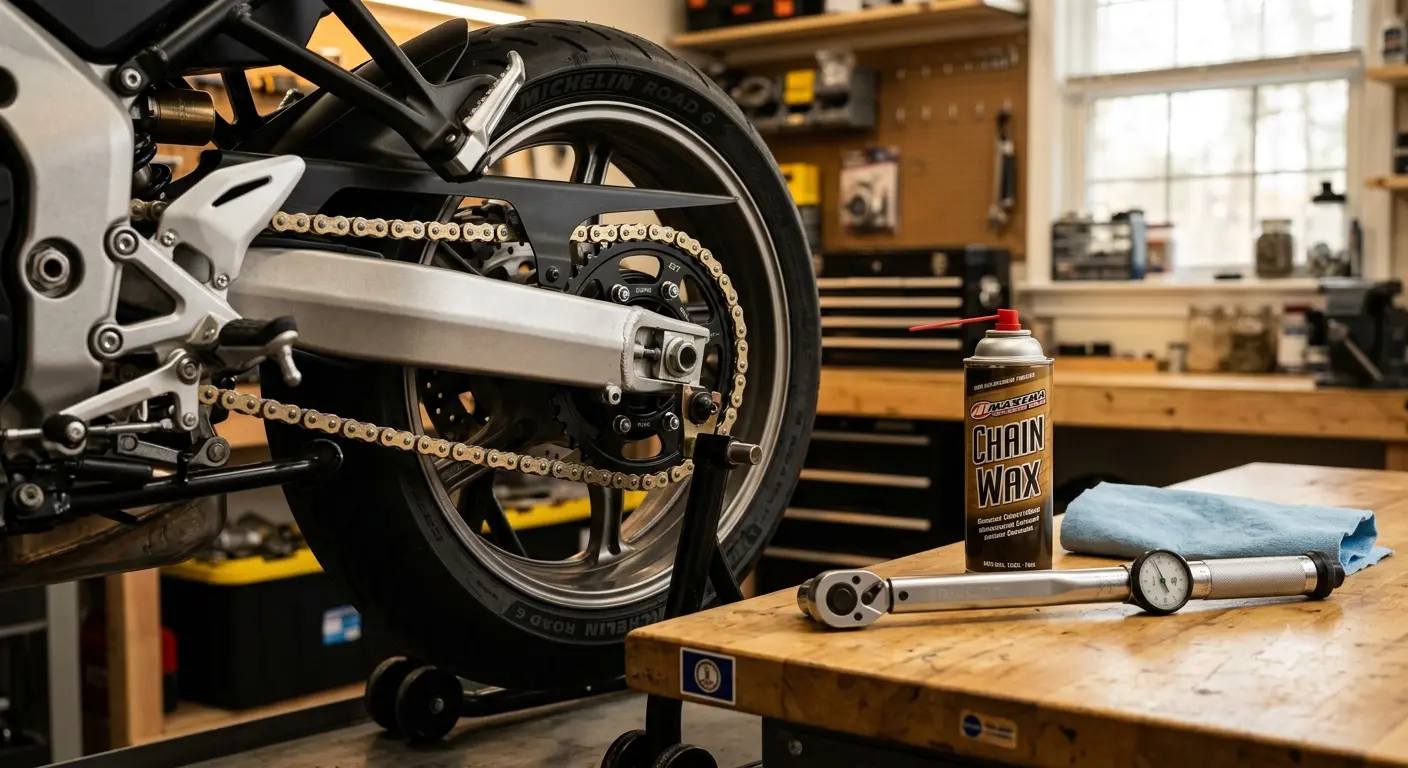
Virginia Motorcycle Maintenance Guide: 7 Pre-Ride Essentials
Riding through the Commonwealth of Virginia offers incredible coastal routes and technical mountain passes. However, the region’s unique geography—ranging from high-humidity coastal salt air in Virginia Beach to rapid elevation shifts along the Blue Ridge Mountains—puts unique mechanical stress on your machine.
Following a targeted Virginia motorcycle maintenance guide ensures your engine, tires, and final drive remain dependable whether you commute daily in Richmond or tackle high-elevation twists on Skyline Drive.
Quick Pre-Ride Inspection Checklist (T-CLOCS Overview):
- Tires & Wheels: Air pressure, tread depth, and rim integrity.
- Controls: Levers, cables, hoses, and throttle return.
- Lights & Electrics: Headlight, brake light, turn signals, and battery charge.
- Oil & Fluids: Engine oil, brake fluid, and coolant levels.
- Chassis: Chain tension, belt drive, and suspension seals.
- Stands: Sidestand return spring and centerstand lock.
Navigating Virginia’s Environmental Challenges
Humidity, seasonal road salt debris, and asphalt temperature swings require proactive preventative care. High summer heat can degrade engine oil viscosity quickly, while damp coastal breezes accelerate drive chain rust and fastener oxidation.
Basic Maintenance Workflow for Coastal & Mountain Riding:
[ Tire Pressure Check ] ──> [ Chain Clean & Lube ] ──> [ Brake Pad Inspection ]
│ │ │
▼ ▼ ▼
(Cold Spec PSI) (Every 300–500 Miles) (Check Minimum 1mm Pad)
7 Essential Maintenance Steps for Virginia Riders
- Monitor Tire Pressure for Elevation and Heat
Mountain elevations cause ambient air pressure changes, while hot asphalt increases internal tire expansion. Always measure tire pressure cold before climbing into high-altitude corridors like Shenandoah National Park. - Maintain and Lubricate the Drive Chain
Virginia’s frequent morning mist and seasonal rain showers pull road grime into your drive chain. Clean and lube your chain every 300 to 500 miles using a high-tack synthetic lubricant to prevent binding and rust. - Inspect Brake Systems and Fluid Health
Descending steep mountain passes like Route 211 generates intense heat in your brake calipers. Ensure your brake pads have ample friction material and bleed old, moisture-contaminated brake fluid annually. - Protect Electrical Systems Against Humidity
Corrosion inside wire harness connectors and battery terminals is a common cause of electrical failure near humid river basins. Apply dielectric grease to open terminals and keep battery lead bolts tight. - Check Suspension and Fork Seals
Rough backroads and sudden frost heaves test your front fork seals. Wipe chrome fork tubes clean after long rides to remove bug splatter and road grit that can tear dust wipers. - Inspect Engine Cooling Systems
Liquid-cooled engines need proper coolant mixtures to withstand hot urban traffic in summer and freezing high-altitude temperatures in winter. Keep radiator fins clear of organic debris. - Store Fuel Properly During Off-Season
When storing your motorcycle through winter months, add a quality fuel stabilizer to prevent ethanol oxidation from clogging injectors or carburetor jets.
Conclusion: Keep Your Machine Peak-Ready
Consistent care turns potential mechanical breakdowns into safe, unforgettable road trips across the Commonwealth. Spend twenty minutes in your workshop before every major journey to keep your machine performing at its absolute best.
Check the details. Protect your investment. Ride safe.
References & Sources
- Motorcycle Safety Foundation (MSF) — Official T-CLOCS Inspection Checklist — msf-usa.org
- Virginia Department of Motor Vehicles (DMV) — Motorcycle Operator Manual & Maintenance — dmv.virginia.gov
- American Motorcyclist Association (AMA) — Motorcycle Maintenance Tips — americanmotorcyclist.com
[Disclaimer: This article is provided for informational, inspirational, and educational purposes only. Always consult your motorcycle manufacturer’s official service manual for exact torque specifications, fluid types, and recommended maintenance intervals.]
Leave a Reply