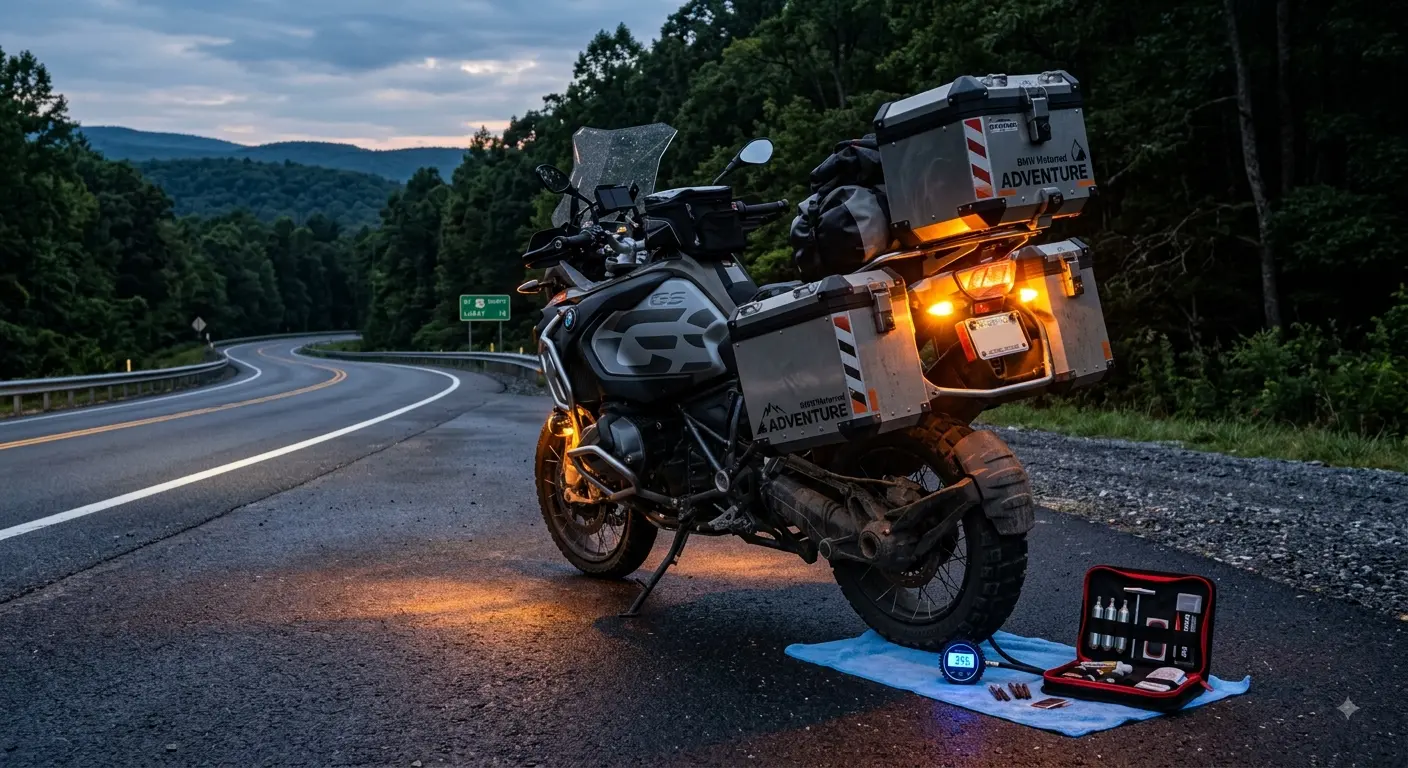
Virginia Motorcycle Roadside Assistance Guide: 5 Emergency Steps
Riding through Virginia offers incredible oceanfront straights and isolated mountain loops. However, experiencing a sudden mechanical breakdown, a flat tire on a remote ridge, or a dead battery in the Shenandoah Valley can quickly derail your journey if you aren’t prepared for rural road emergencies.
Having a dedicated Virginia motorcycle roadside assistance guide gives you a clear, stress-free action plan for securing flatbed towing, managing minor side-of-the-road repairs, and staying safe in low-visibility mountain passes.
Quick Emergency Roadside Checklist:
- Safety First: Move your motorcycle completely off the travel lane onto firm ground.
- Hazard Visibility: Turn on hazard lights or place reflective compact safety markers.
- Exact Location: Note your exact milepost, exit number, or GPS coordinates.
- Coverage Verification: Confirm your roadside policy includes flatbed motorcycle towing.
- Cell Dead-Zones: Carry an offline satellite messenger when riding mountain gaps.
Navigating Cell Dead-Zones and Mountain Breakdown Safety
Mountain passes like the Blue Ridge Parkway and rural routes in Western Virginia frequently lack mobile signal. Knowing how to handle emergencies without immediate cell service is vital for every long-distance touring rider.
Emergency Breakdown Action Flow:
[ Secure Bike Off-Road ] ──> [ Mark Hazard Zone ] ──> [ Check Offline GPS / SOS ]
│ │ │
▼ ▼ ▼
(Avoid Soft Shoulder) (Deploy Reflective Tape) (Locate Nearest Milepost)
5 Essential Steps for Roadside Emergencies in Virginia
- Safely Position Your Machine Away from Traffic
If your engine cuts out or a tire loses pressure, pull over immediately to the right shoulder. Never stop your motorcycle on the inside curve of a winding mountain road where oncoming drivers have limited sightlines. - Carry a Compact Plug Kit and Mini 12V Compressor
Tubeless motorcycle tires can often be temporarily patched on the roadside. A compact tire plug kit and a small battery-powered air pump can get you safely to the next town without waiting hours for a tow truck. - Verify Motorcycle-Specific Towing Services
Standard auto tow trucks often lack the soft-rigging straps and wheel chocks required to haul a motorcycle safely. Ensure your roadside assistance provider guarantees specialized flatbed towing. - Manage Battery Failures in Rural Areas
Modern fuel-injected motorcycles require steady battery voltage to operate fuel pumps and ECUs. Carry a lightweight lithium jump-pack in your saddlebag to boost a drained battery in remote gas stations. - Prepare for Weather Exposure While Waiting
Waiting for a flatbed tow truck in rural Virginia can take over an hour. Always keep a compact rain shell, hydration packet, and emergency space blanket packed in your tail bag.
Conclusion: Preparation Meets Absolute Peace of Mind
Mechanical hiccups are an inevitable part of long-distance motorcycle touring. Equipping yourself with the right roadside knowledge, tools, and towing coverage ensures that a minor glitch remains a minor delay rather than a ruined trip.
Pack the plug kit. Secure flatbed coverage. Ride with confidence.
Disclaimer: This article is provided for informational, inspirational, and educational purposes only. Roadside assistance coverage details, state towing regulations, and emergency dispatch protocols vary by insurance provider and location. Always review your policy terms before embarking on long rides.
References & Sources
- Motorcycle Safety Foundation (MSF) — Roadside Mechanical Emergency Tips — msf-usa.org
- Virginia Department of Transportation (VDOT) — Emergency Highway Assistance & 511 Services — virginiadot.org
- American Motorcyclist Association (AMA) — Roadside Towing & Member Coverage Guidelines — americanmotorcyclist.com
Leave a Reply