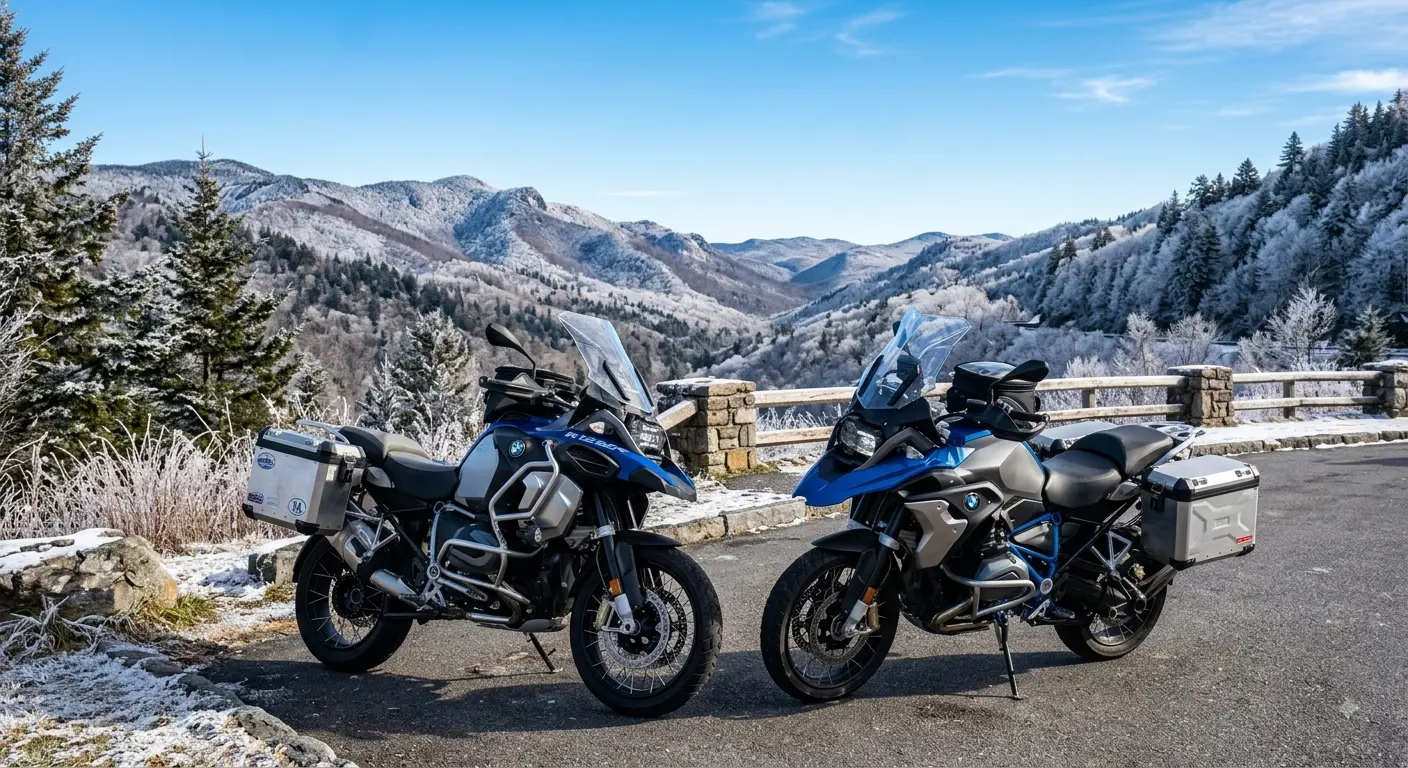
Virginia Motorcycle Winter Riding Prep
Riding through Virginia during the winter months presents a unique blend of crisp, clear mountain days and sudden freezing conditions. While southern coastal areas experience milder temperatures, high-elevation routes along the Blue Ridge and Central Virginia highways routinely face freezing asphalt, road salt treatments, and rapid temperature drops.
Following a dedicated Virginia motorcycle winter riding prep guide ensures your machine stays mechanically sound and you remain warm, focused, and completely protected through the coldest riding months.
❄️ Navigating Road Salt, Battery Health, and Freezing Temperatures
Winter road maintenance in Virginia relies heavily on liquid brine and rock salt treatments. These chemical compounds quickly accelerate corrosion on bare metals, alloy wheels, and drive chains if not properly managed after every ride. Before hitting treated roads, applying a protective anti-corrosion barrier spray to exposed metallic components helps shield your frame and engine cases from harsh chemical degradation.
Sub-freezing temperatures also put severe stress on your motorcycle’s electrical system and tire traction. Cold ambient air drastically reduces battery efficiency, while cold rubber requires significantly longer distance to warm up and grip the road surface properly. Keeping your battery on a smart tender and verifying cold tire pressure before every ride are essential steps for reliable cold-weather operation.
🛠️ 6 Essential Steps for Cold Weather Riding
- Protect Drivetrain and Frame Against Road Salt
Rinse your motorcycle with cold water after navigating brine-treated highways to prevent salt accumulation, and keep your drive chain thoroughly lubricated with a water-repellent chain wax. - Manage Cold Battery Health
Keep your battery on a dedicated trickle charger overnight. Ensure your alternator can support the power draw if operating heavy electrically heated gear. - Adjust Tire Pressure for Cold Drops
Ambient pressure drops in cold weather. Check tire inflation when cold, and allow extra stopping distance on freezing pavement. - Install Anti-Fog Visor Solutions
Equip your helmet with a double-lens Pinlock insert or high-grade anti-fog treatment to prevent breath condensation from blocking your vision. - Utilize Layered and Heated Gear
Combine windproof outer shells with electrically heated liners to maintain core body temperature and preserve quick reflex responses. - Watch for Black Ice on Mountain Passes
Exercise extreme caution on shaded mountain curves, bridges, and overpasses where moisture freezes quickly even when main roads appear clear.
🎯 Conclusion: Stay Warm, Protected, and Road-Ready
Winter riding across Virginia rewards disciplined riders with clear blue skies and peaceful, uncrowded highways. By protecting your motorcycle against salt corrosion and managing your body heat, you can safely enjoy cold-weather touring across the Commonwealth.
Protect the metal. Layer up right. Ride safe.
📚 References & Sources
- Motorcycle Safety Foundation (MSF) — Cold Weather Riding Guidelines — msf-usa.org
- Virginia Department of Transportation (VDOT) — Winter Road Conditions & Treatment — virginiadot.org
- American Motorcyclist Association (AMA) — Winter Storage & Cold Riding Prep — americanmotorcyclist.com
Disclaimer: This article is provided for informational, inspirational, and educational purposes only. Winter road conditions, weather warnings, and local salt treatments vary across Virginia regions. Always review local VDOT weather alerts before riding in sub-freezing temperatures.
Leave a Reply