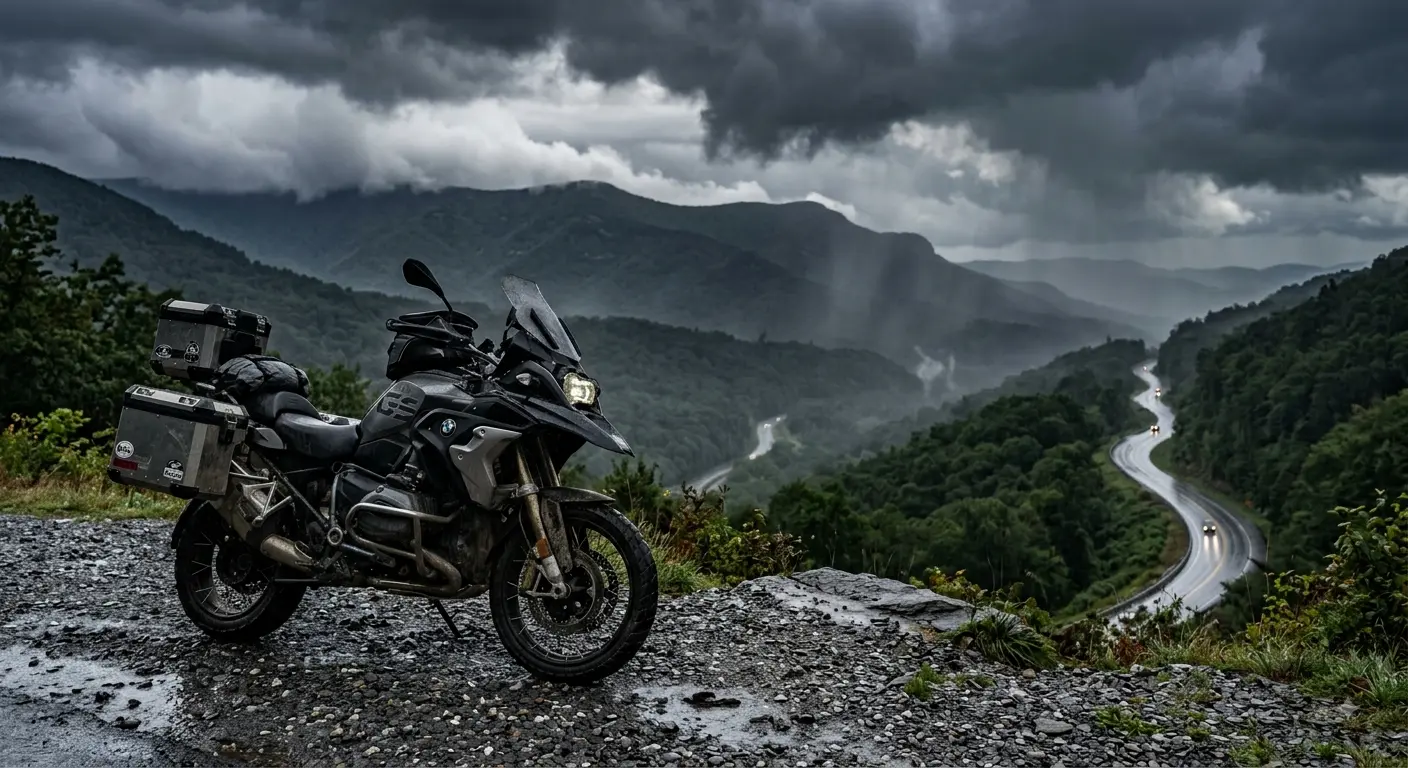
Navigating Virginia’s diverse geography—from the exposed ridges of the Blue Ridge Parkway to the open spans of the Chesapeake Bay Bridge-Tunnel—exposes riders to sudden, violent wind gusts and severe coastal storms. Unpredictable crosswinds and sudden squalls can easily compromise chassis stability, drift your bike across lane markers, or throw loose road debris into your path. Mastering Virginia motorcycle high-wind safety techniques ensures you maintain firm control, protect your trajectory, and safely ride through challenging weather conditions across the Commonwealth.
Quick Inspection Checklist
| Storm Hazard Element | Operational Inspection Standard | Action & Target Parameter |
|---|---|---|
| Focus Keyword | Virginia motorcycle high-wind safety | Featured in Title, Opening 100 words, H2s, & Meta |
| Wind & Aerodynamics | Crosswind gusts & heavy turbulence | Tuck knees into tank; relax grip; lower wind profile |
| Tire Traction | Wet road grip & hydroplaning risk | Maintain cold OEM PSI; ensure minimum 3/32″ tread depth |
| Bridges & Ridges | High-exposure wind corridors | Reduce speed by 10-15 mph; create side buffer zones |
| Vortices & Wake | Large commercial truck turbulence | Hold wider lane position; brace for sudden pressure drops |
High-wind phenomena across Virginia originate from two main sources: mountain-wave downdrafts along the Appalachians and sudden coastal squalls near the Atlantic. When wind encounters a moving motorcycle, it exerts a lateral aerodynamic force against the bike’s side profile, shifting the center of pressure away from its geometric center.
   [ CROSSWIND FORCE (35+ MPH) ]
                 │
                 ▼
┌──────────────────────────────────┐
│ Side Profile / Pannier Resistance │  ◄── Aerodynamic Drag Surface
└────────────────┬─────────────────┘
                 │
                 ▼
┌──────────────────────────────────┐
│ Upper Body & Helmet Wind Load    │  ◄── Rider Aerodynamic Vector
└────────────────┬─────────────────┘
                 │
                 ▼
┌──────────────────────────────────┐
│ Tire Contact Patch Counter-Steer │  ◄── Friction & Counter-Lean Response
└──────────────────────────────────┘
When a powerful gust strikes your side profile, the motorcycle naturally wants to lean with the wind, drifting you in the direction the gust is blowing. To counter this lateral force, riders must apply deliberate counter-steering pressure into the wind while keeping their lower body firmly locked to the tank.
1. Implement the Knee-Tank Lock & Loose Arm Technique
Physical body positioning is your first line of defense against crosswind turbulence:
- Anchor the Lower Body: Squeeze your knees tightly against the fuel tank. Locking your lower body to the chassis creates a unified mass, keeping the motorcycle anchored beneath you.
- Relax Your Upper Body: Keep your elbows bent and arms loose. Stiffening your arms transfers wind forces directly from your shoulders to the handlebars, causing unwanted steering inputs.
- Knee-Out Wind Sail: Extend your knee on the side the wind is coming from. Acting as an aerodynamic scoop, your knee catches airflow to help pull the bike into the wind naturally.
2. Counter-Steering Into Continuous Crosswinds
When riding through sustained lateral winds, maintain a continuous lean into the wind vector:
- Apply Constant Pressure: Push gently on the handlebar grip facing the direction of the wind (e.g., push left to lean left into a wind blowing from the left).
- Buffer Lane Positioning: Position your motorcycle on the upwind side of your lane. This gives you a safety cushion if a sudden 40+ mph gust pushes you sideways.
- Anticipate Wind Shadows: Be ready for the wind to drop suddenly when passing large semi-trucks, dense forest lines, or rock cuts. Release counter-steering pressure immediately to prevent veering toward the obstacle.
3. Riding Through Heavy Rain & Hydroplaning Zones
High winds often bring heavy rain squalls that reduce traction and visibility:
- Follow Vehicle Tire Tracks: Ride in the tire tracks left by passenger cars where water has already been displaced.
- Avoid Smooth Metallic & Painted Surfaces: Stay off wet crosswalk paint, bridge expansion joints, and metallic construction plates—these become as slick as ice when wet.
- Smooth Control Inputs: Avoid sudden throttle twists or hard braking. Roll on the throttle smoothly and rely on engine braking to decelerate safely.
Mastering Virginia motorcycle high-wind safety transforms stressful storm conditions into a manageable, controlled ride. By staying relaxed, adjusting your lane position, and understanding wind dynamics, you can navigate Virginia’s most exposed routes with confidence.
Disclaimer: This article is intended for educational and informational purposes only. Extreme weather conditions pose severe risks to motorcycle safety. When sustained winds exceed 45 mph or severe weather warnings are issued, the safest choice is to pull off the roadway to a secure location and wait out the storm.
Official & Credible Sources
- National Weather Service (NWS) Virginia Forecast Office: https://www.weather.gov
- Virginia Department of Transportation (VDOT) Weather Safety: https://www.virginiadot.org
- Motorcycle Safety Foundation (MSF) Weather Riding Guidelines: https://msf-usa.org
Leave a Reply