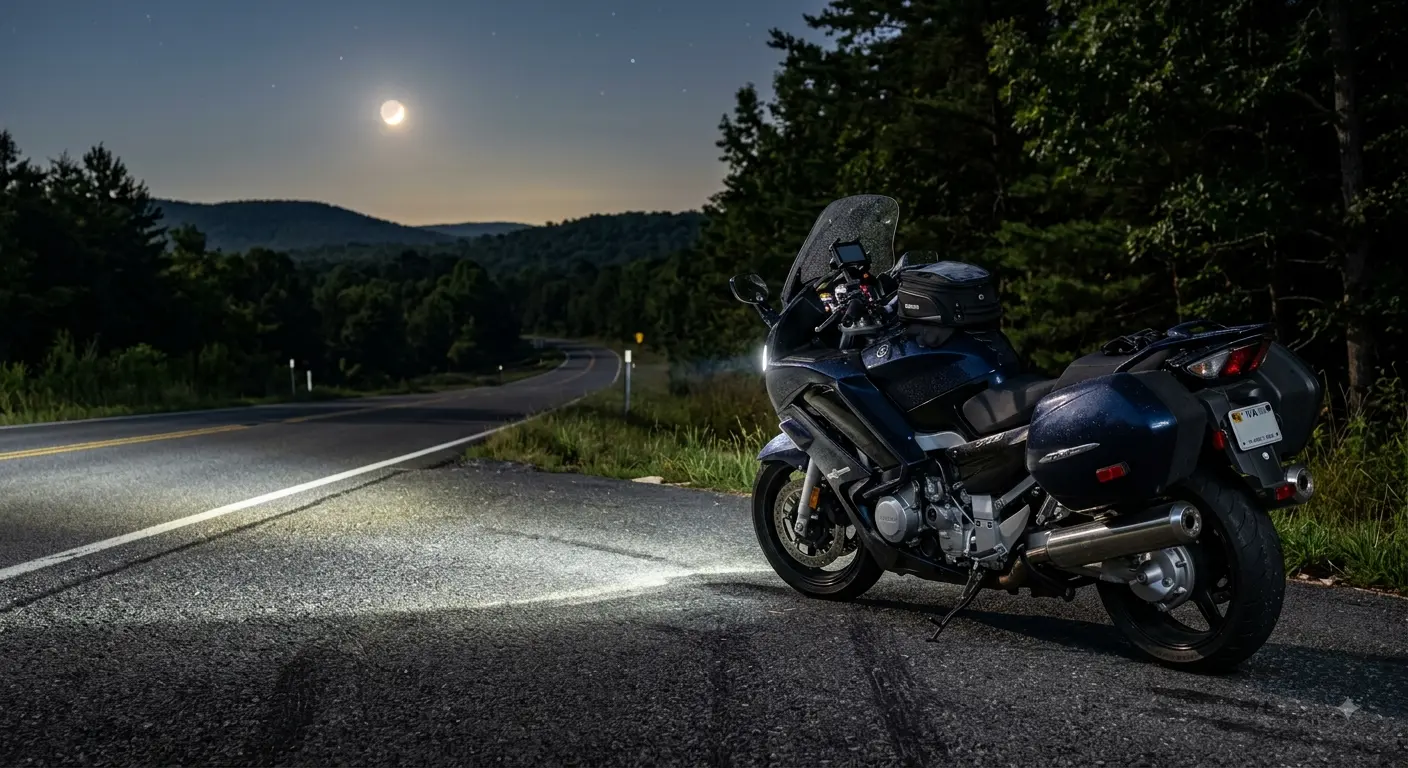
Riding Virginia’s backroads after sundown transforms familiar highways into challenging environments where visibility drops and wildlife hazards surge. From unlit mountain passes along the Blue Ridge to rural stretches in Shenandoah County, nighttime riding introduces severe risks including white-tailed deer crossings, blinding glare from oncoming high beams, and sudden road hazards masked by deep shadows. Mastering Virginia motorcycle night riding safety protocols ensures you can navigate dark rural corridors with confidence while maintaining total chassis stability.
Quick Inspection Checklist
| Night Hazard Inspection Element | Primary Inspection Parameter | Operational Standard |
|---|---|---|
| Focus Keyword | Virginia motorcycle night riding safety | Present in Title, First 100 words, H2s, & Meta |
| Headlight Output | Auxiliary LED / DOT compliance | Properly aimed beam patterns; clean, scratch-free lenses |
| Visor & Eye Protection | Clear, anti-fog shield | Optical clarity; zero tinting or smoke finishes after dusk |
| Rider Visibility | High-visibility retro-reflective gear | ANSI Class 2 or Class 3 reflective panel integration |
| Wildlife Scanning Zone | Peripheral roadside thermal/eye-shine | Scan 12-15 seconds ahead; reduce backroad speed by 10-15 mph |
Night driving across rural Virginia limits a rider’s visual lead to the direct reach of their headlight beam. At 55 mph, a motorcycle covers 80.6 feet per second. Standard low-beam headlights illuminate roughly 150 feet ahead, leaving less than two seconds to identify and react to an obstacle.
   [ DARK ROADWAY ENVIRONMENT ]
                │
                ▼
┌──────────────────────────────────┐
│ Headlight Beam Distance (150 ft) │  ◄── Limited Forward Visual Range
└────────────────┬─────────────────┘
                 │
                 ▼
┌──────────────────────────────────┐
│ Scan Road Edges for Deer Glint   │  ◄── Eye-Shine Reflection Detection
└────────────────┬─────────────────┘
                 │
                 ▼
┌──────────────────────────────────┐
│ Reaction Buffer & Brake Margin   │  ◄── Reduced Speed Threshold
└──────────────────────────────────┘
The high density of white-tailed deer in rural Virginia creates an active threat during nocturnal hours. Spotting eye-shine—the retro-reflective glint from an animal’s eyes—along tree lines provides the critical split-second warning needed to brake before an impact occurs.
1. Swap to a Crystal-Clear, Anti-Fog Face Shield
Never ride at night with a tinted, mirrored, or smoke visor:
- Optical Clarity: Switch to a completely clear, scratch-free face shield before dusk. Scratches scatter light from oncoming traffic, causing blinding glare.
- Anti-Fog Pinlock: Drop in a Pinlock lens or apply an anti-fog treatment to prevent condensation buildup caused by nighttime temperature drops.
2. Optimize Headlight Aim & Upgrade Auxiliary Lighting
Your headlight is your main survival tool on unlit roads:
- Check Alignment: Ensure your headlight is correctly aimed under full load (with rider and gear). An improperly aligned beam illuminates tree canopies instead of the pavement.
- Auxiliary Fog & Driving Lights: Install auxiliary LED driving lights mounted low on crash bars to widen the light pattern, exposing gravel and wildlife on road shoulders.
3. Master the Wildlife Scanning Technique (Deer Mitigation)
Virginia ranks high nationally for animal-vehicle collisions, especially during fall mating season:
- Look for “Eye-Shine”: Scan tree lines and ditches for glowing eyes reflecting your headlight beam.
- The “Where There’s One, There Are More” Rule: If a deer crosses the road ahead, slow down immediately. White-tailed deer travel in herds, and a second or third animal frequently follows.
- Avoid Swerving: If a collision is imminent, brake firmly in a straight line. Swerving at high speeds on dark roads often leads to running off the shoulder or crashing into fixed roadside obstacles.
4. Maximize Retro-Reflective Surface Area
Contrast is critical for staying visible to motorists traveling behind or beside you:
- 360-Degree Reflectivity: Wear jackets, pants, and helmet decals featuring micro-prismatic retro-reflective materials (such as 3M Scotchlite) that bounce light directly back to source vehicles.
- High-Vis Accents: Incorporate hi-vis neon yellow or orange panels on your upper torso and helmet to stand out against pitch-black backgrounds.
5. Adjust Speed to Avoid “Outriding” Your Headlights
Never travel faster than your ability to stop within the distance illuminated by your lights:
- Reduce Speed Margins: Lower your cruising speed by 10–15 mph on unlit rural routes to extend your reaction time window.
- Increase Following Distance: Expand your following distance from two seconds to four or five seconds behind lead vehicles to account for unexpected road debris.
6. Combat Glare from Oncoming High Beams
Bright headlights from oncoming traffic can temporarily blind your night-adapted vision:
- Shift Your Gaze: Avoid staring directly into oncoming headlights. Look down toward the right fog line or white edge line of your lane to maintain steering orientation until the vehicle passes.
- Keep Glasses Clean: If you wear eyeglasses beneath your helmet, ensure both sides of the lenses are thoroughly cleaned to eliminate starburst glare.
7. Use Lead Vehicles as “Snowplows”
Let four-wheeled traffic clear the road ahead of you:
- Buffer Safety Distance: Follow a passenger car or truck at a safe distance (3–4 seconds back). Use their headlights to spot distant road hazards, potholes, or crossing animals early.
- Watch Their Brake Lights: If the lead vehicle brakes suddenly, assume a road hazard or wildlife is present and reduce your speed immediately.
Adopting disciplined Virginia motorcycle night riding safety habits keeps you secure when visibility declines. By optimizing your lighting setup, maintaining clear optics, scanning aggressively for wildlife, and managing your speed, you can safely enjoy the tranquility of Virginia’s roads after dark.
Legal Disclaimer: This article is provided for educational and informational purposes only. Nighttime motorcycle operation carries elevated risks due to reduced visibility and wildlife activity. Always ensure your motorcycle complies with Virginia Motor Vehicle Codes regarding headlight, taillight, and reflector placement before riding on public roadways.
Official & Credible Sources
- Virginia Department of Transportation (VDOT) Highway Safety: https://www.virginiadot.org
- Virginia Department of Wildlife Resources (DWR) Deer Hazards: https://dwr.virginia.gov
- Motorcycle Safety Foundation (MSF) Night Riding Tips: https://msf-usa.org
Leave a Reply