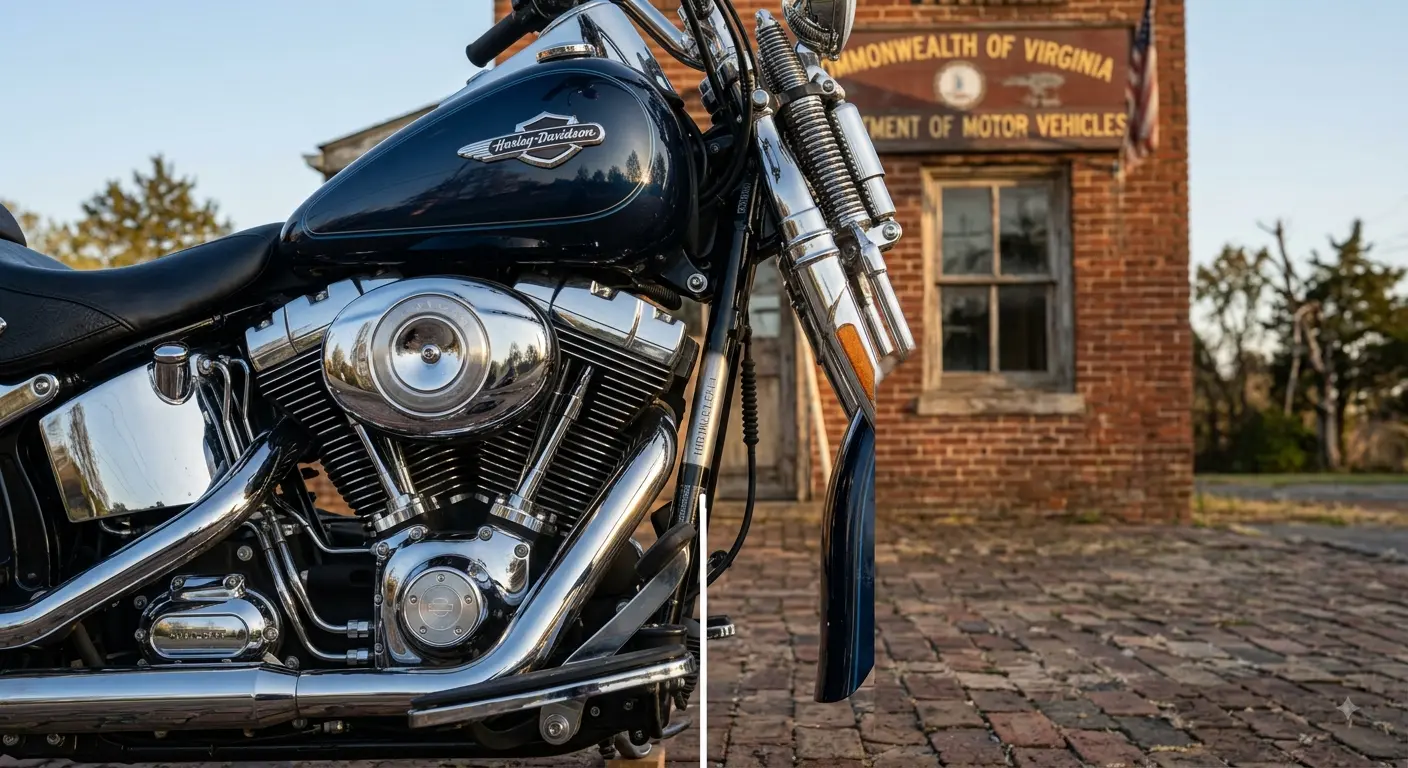
Purchasing a pre-owned bike in the Old Dominion offers an affordable route to the open road, but navigating private sales requires strict attention to legal documentation and mechanical health. From verifying clean ownership titles with the Virginia Department of Motor Vehicles (DMV) to performing a thorough Vehicle Identification Number (VIN) audit, missing a single administrative detail can turn a great deal into a costly legal head-scratcher. Following a structured guide for buying a used motorcycle in Virginia protects your financial investment and ensures a seamless title transfer before your first ride.
Quick Inspection Checklist
| Buyer Verification Stage | Primary Legal & Physical Target | Operational Standard / Requirement |
|---|---|---|
| Focus Keyword | Buying a Used Motorcycle in Virginia | Included in Title, Intro, H2 Headers, & Meta |
| Title Status | Clean Virginia Title (No Lien) | Seller signature matches DMV records exactly; no open liens |
| VIN Verification | Frame, engine casing, & title match | 17-digit VIN must match all physical stampings and title |
| Proof of Sale | Official Virginia DMV Bill of Sale (Form SUT-1) | Signed by both parties; declares purchase price for SUT tax |
| State Inspection | Virginia Safety Inspection Sticker | Valid yellow safety decal or budget for immediate official inspection |
The private sale transfer process in Virginia follows a strict legal flow. Skipping steps or accepting a “Bill of Sale only” without a physical, clean title prevents you from legally registering or insuring the vehicle in the Commonwealth.
   [ SELLER OFFERS MOTORCYCLE ]
                 │
                 ▼
┌──────────────────────────────────┐
│ Physical VIN & Frame Audit       │  ◄── Verify 17-Digit Frame Stamping
└────────────────┬─────────────────┘
                 │
                 ▼
┌──────────────────────────────────┐
│ Title Check & Lien Release Audit │  ◄── Confirm No Outstanding DMV Liens
└────────────────┬─────────────────┘
                 │
                 ▼
┌──────────────────────────────────┐
│ Form SUT-1 & DMV Title Assignment│  ◄── Complete Odometer & Price Sign-off
└────────────────┬─────────────────┘
                 │
                 ▼
   [ REGISTER & TAX AT VA DMV ]
Ensuring that the title is clear of financial liens and that the seller’s name matches their state-issued driver’s license eliminates title-jumping risks and protects your legal ownership.
1. Perform a Comprehensive VIN Audit & Title Check
Before exchanging cash, thoroughly inspect the physical vehicle identification number stamped on the motorcycle frame neck and engine case:
- Match All 17 Digits: Compare the physical VIN on the steering neck to the VIN printed on the certificate of title and current registration card. Any sign of tampering or gouging on the frame stamping is an immediate deal-breaker.
- Run a National Title Search: Use the National Motor Vehicle Title Information System (NMVTIS) or NICB VINCheck to confirm the bike has not been declared a salvage unit, stolen vehicle, or flood-damaged write-off.
2. Verify Title Authenticity & Lien Releases
Virginia law strictly requires a valid, physical Certificate of Title for ownership transfer:
- Beware of “Bill of Sale Only” Deals: In Virginia, you cannot register a motorcycle using only a Bill of Sale if the title is lost. The seller must apply for a duplicate title (Form VSA 67) before completing the sale.
- Check for Financial Liens: Ensure Section A on the front of the title shows no active liens. If a financial institution is listed, require an official Lien Release letter stamped by the DMV or bank.
3. Complete Official DMV Documentation Correctly
Avoid registration delays by filling out the back of the Virginia title precisely:
- Certificate of Title Assignment: The seller must print and sign their name exactly as it appears on the front of the title. Record the exact odometer reading at the time of transfer.
- Virginia Bill of Sale (Form SUT-1): Fill out Form SUT-1 to document the exact sale price. Virginia charges a Sales and Use Tax (SUT) based on the purchase price or the NADA trade-in value (whichever is higher).
4. Conduct a Static Cold Mechanical Inspection
Always inspect a used motorcycle when the engine is completely cold to reveal hidden mechanical issues:
- Cold Crank Test: Touch the engine case to confirm it hasn’t been warmed up prior to your arrival. A cold engine reveals true battery condition, choke function, and starter clutch health.
- Fluid & Wear Audit: Check for fork seal leaks, rust inside the gas tank, chain wear, brake pad thickness, and dry-rotted tire sidewalls.
5. Transfer Registration & Complete VA Safety Inspection
Once the title is signed over, finalize your legal standing before taking to public highways:
- DMV Registration & Plates: Take the signed title, Form SUT-1, and proof of Virginia motorcycle insurance to a local DMV customer service center to pay taxes, transfer the title, and receive license plates.
- Virginia Safety Inspection: Every motorcycle operated on state roads must pass an annual Virginia State Safety Inspection at an authorized station to receive a valid inspection decal.
Taking a methodical approach when buying a used motorcycle in Virginia guarantees a smooth purchase experience free of administrative roadblocks. Verifying titles, auditing VINs, and filing proper DMV documentation lets you take ownership with complete peace of mind.
Legal Disclaimer: This guide is provided for educational and informational purposes only. Virginia DMV regulations and tax structures are subject to change. Always consult official Virginia Department of Motor Vehicles documentation or a legal representative to confirm title transfer compliance.
Official & Credible Sources
- Virginia Department of Motor Vehicles (DMV) Titling Guide: https://www.dmv.virginia.gov
- National Insurance Crime Bureau (NICB) Free VINCheck: https://www.nicb.org
- Virginia State Police Safety Inspection Program: https://vsp.virginia.gov
Leave a Reply