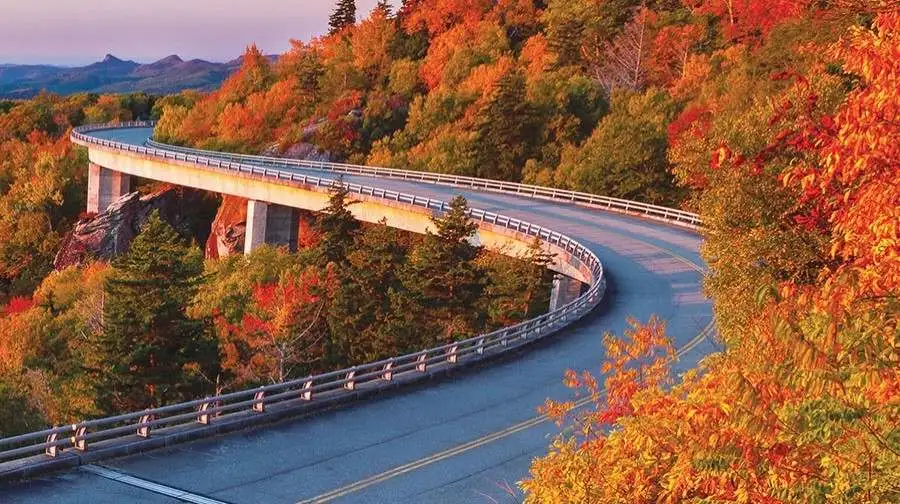
Spanning the northernmost mountains of the national parkway from Rockfish Gap (Milepost 0) down toward the Roanoke Valley, the Blue Ridge Parkway Ridge Section motorcycle guide covers one of Eastern America’s premier scenic touring corridors. Characterized by wide, sweeping turns that hug high mountain crests, continuous valley overlooks, and historical sites like Humpback Rocks and Otter Creek, this ridge section delivers a smooth, elevated riding cadence. Operating under a steady 45 mph speed limit, the parkway offers an uninterrupted, stop-light-free journey through Virginia’s high country.
Essential Riding Highlights & Ridge Parkway Regulations
Navigating the northern ridge section of the Blue Ridge Parkway requires adherence to parkway rules and mountain riding awareness:
- 1. Maintain Sustainable 45 MPH Pacing:
Designed for leisurely scenic travel, the parkway enforces a maximum speed limit of 45 mph (frequently reduced to 35 mph near visitor centers). Federal park rangers monitor speed strictly; maintain a steady pace and utilize paved overlooks to allow faster traffic to pass safely. - 2. Prepare for Sudden High-Ridge Fog and Wind Gusts:
Exposed ridge sections above 3,000 feet frequently encounter sudden cloud cover, thick mountain fog, and crosswinds. Reduce speed, increase following distances, and keep low-beam headlights active during low-visibility stretches. - 3. Watch for Wildlife Crossing Open Ridge Slopes:
Whitetail deer, wild turkeys, and black bears move frequently across the parkway pavement between timberlines and ridge pastures, particularly near morning and evening twilight. - 4. Limited Gas Stations Directly on the Parkway:
Fuel options on the parkway pavement are extremely limited. Plan fuel stops at major exit interchanges such as US 60 (Buena Vista / Amherst) or US 501 (Glasgow) before pushing deep into rural ridge segments.
Before setting off on long parkway tours, perform a thorough inspection of your motorcycle’s braking and mechanical systems using the complete pretrip motorcycle maintenance guide. Check cold tire pressure and tread condition for smooth parkway asphalt with motorcycle tire pressure and tread maintenance for mountain curves and slick asphalt. If connecting from the national park to the north, review skyline drive southern section motorcycle guide.
Conclusion: America’s Premier Scenic Ridge Highway
Studying this Blue Ridge Parkway Ridge Section motorcycle guide arms riders with essential strategies for a seamless, breathtaking mountain journey. With panoramic valley vistas, gentle sweeping curves, and pure riding rhythm, this northern ridge section is a foundational piece of any Virginia motorcycle tour.
Legal Disclaimer: This guide is provided for educational and route-planning purposes only. Always observe federal parkway speed limits, yield to wildlife, and exercise caution in low-visibility mountain weather.
Official & Credible Sources
- National Park Service (NPS) — Blue Ridge Parkway Travel & Road Conditions: https://www.nps.gov/blri
- Virginia Tourism Corporation — Blue Ridge Parkway Touring Directory: https://www.virginia.org
- Virginia Department of Transportation (VDOT) — Parkway Interchange Access Updates: https://www.virginiadot.org
Enjoyed This Guide? Explore Related Virginia Touring Resources:
- Shenandoah Connectors: Tour the national park’s southern extension on skyline drive southern section motorcycle guide.
- Canyon Routes: Ride nearby river gaps on route 39 goshen pass motorcycle ride guide.
- Pre-Trip Maintenance: Inspect your controls and brakes before parkway rides using the complete pretrip motorcycle maintenance guide.
- Tire Care: Maintain optimal rubber inflation for mountain ridges with motorcycle tire pressure and tread maintenance for mountain curves and slick asphalt.
- Highland River Valleys: Explore serene valley sweeps on route 220 highland to bath counties motorcycle guide.
Leave a Reply