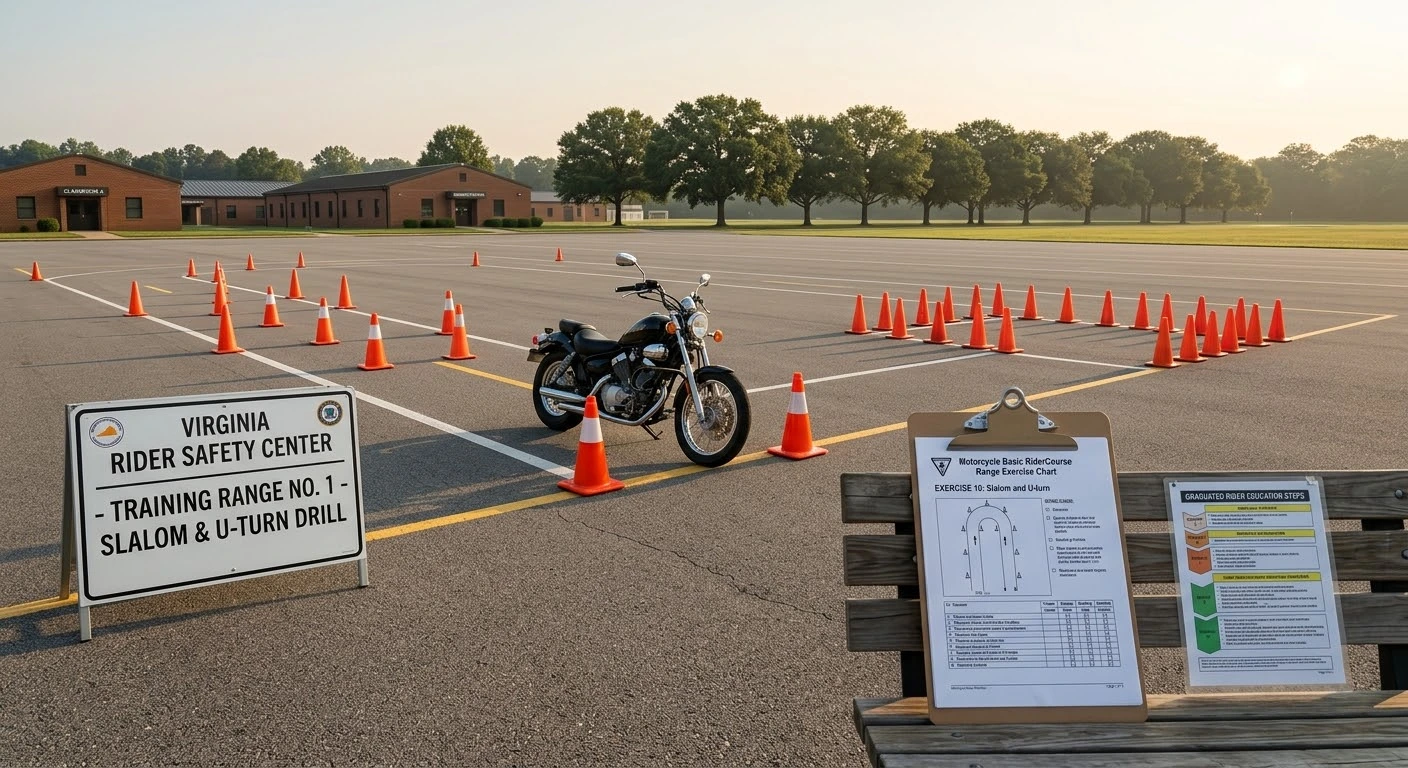
Enrolling in formal motorcycle safety courses in Virginia what to expect provides both novice and experienced riders with a structured, professional environment to master crucial riding techniques. Administered through the Virginia Rider Training Program (VRTP) and certified by the Motorcycle Safety Foundation (MSF), these courses offer hands-on instruction covering low-speed control, emergency braking, and hazard avoidance. Completing a certified training course not only builds life-saving road skills but also waives the DMV motorcycle road skills test and unlocks discounts on motorcycle insurance across the Commonwealth.
Quick Inspection Checklist
| Course Requirement / Element | Operational Target Parameter | Expected Outcome Standard |
|---|---|---|
| Focus Keyword | Motorcycle Safety Courses in Virginia What to Expect | Used in Title, Intro, H2 Headers, & Meta |
| DMV License Waiver | VRTP / MSF Completion Certificate | Waives physical DMV road test for Class M endorsement |
| Required Riding Gear | Full protective riding attire | DOT helmet, eye protection, long sleeves, gloves, boots |
| Classroom Instruction | Risk management & street strategies | 5 hours of theory, hazard awareness, and exam evaluation |
| Range Hands-On Training | Closed-course control drills | 10 hours of practical clutch, braking, and cornering exercises |
The structured training pathway in Virginia follows a step-by-step progression designed to take riders from basic control inputs to complex emergency maneuvers on a secure closed course.
   [ ENROLL IN VIRGINIA RIDER TRAINING PROGRAM ]
                        │
                        ▼
┌──────────────────────────────────────────────┐
│ Classroom Theory & Hazard Risk Assessment    │ ◄── Written Knowledge Test
└───────────────────────┬──────────────────────┘
                        │
                        ▼
┌──────────────────────────────────────────────┐
│ Closed-Course Range Friction Zone & Braking │ ◄── Hands-On Motorcycle Control
└───────────────────────┬──────────────────────┘
                        │
                        ▼
┌──────────────────────────────────────────────┐
│ Final Practical Riding Skills Evaluation     │ ◄── Passing Earns VRTP Card
└───────────────────────┬──────────────────────┘
                        │
                        ▼
   [ EARN VIRGINIA DMV CLASS M LICENSE WAIVER ]
Earning your completion certificate waives the Virginia DMV motorcycle road test, allowing you to add a Class M endorsement directly to your driver’s license.
1. Understand Course Types: BRC vs. Advanced Training
Virginia offers specialized courses tailored to different experience levels:
- Basic RiderCourse (BRC): Designed for complete beginners or riders returning after a long break. Training motorcycles (125cc–250cc) are provided on site.
- Basic RiderCourse 2 (BRC2): A one-day course for licensed riders looking to refine skills using their personal motorcycles.
- Advanced RiderCourse (ARC): Focuses on high-level cornering judgment, traction management, and stop-swerving tactics for experienced riders.
2. Mandatory Protective Gear Requirements
To participate in the practical range sessions, students must bring specific personal protective equipment (PPE):
- DOT-Approved Helmet & Eyewear: A full-face or open-face helmet with an integrated shield or shatterproof goggles.
- Full-Coverage Apparel: Durable long-sleeved jacket or shirt, full-length denim pants or riding trousers without rips.
- Over-the-Ankle Footwear: Sturdy leather boots that completely cover and support the ankle bones with non-slip rubber soles.
- Full-Finger Gloves: 100% leather or synthetic motorcycle gloves offering full palm and knuckle coverage.
3. What Happens During Classroom Modules
The classroom portion lays the mental foundation for hazard management:
- Risk Perception Training: Analyzing real-world accident statistics and identifying high-risk intersection scenarios.
- SEE Strategy (Search, Evaluate, Execute): Learning systematic visual scanning habits to spot hazards 12 seconds ahead.
- Written Knowledge Exam: Evaluating understanding of road positioning, brake bias, and alcohol/fatigue risks.
4. What Happens On the Practical Training Range
Range training builds muscle memory through progressive riding drills:
- Friction Zone Mastery: Learning precise clutch control to execute smooth low-speed U-turns and slow-speed maneuvers.
- Emergency Braking Drills: Practicing maximum straight-line stopping using front and rear brakes without locking tires.
- Obstacle Swerving & Cornering: Executing rapid counter-steering inputs to swerve around unexpected obstacles at speed.
Knowing about motorcycle safety courses in Virginia what to expect helps you prepare mentally and physically for success. Completing this training equips you with fundamental riding skills, earns your DMV road test waiver, and sets the stage for a lifetime of safe riding across Virginia.
Legal Disclaimer: This article is intended for educational and informational purposes only. Course prerequisites, registration fees, and DMV endorsement rules are subject to change. Consult official VRTP or Virginia DMV portals for current licensing requirements.
Official & Credible Sources
- Virginia Department of Motor Vehicles (DMV) Rider Training: https://www.dmv.virginia.gov
- Motorcycle Safety Foundation (MSF) Course Finder: https://msf-usa.org
- Virginia Rider Training Program (VRTP) Information: https://vrtp.org
Leave a Reply