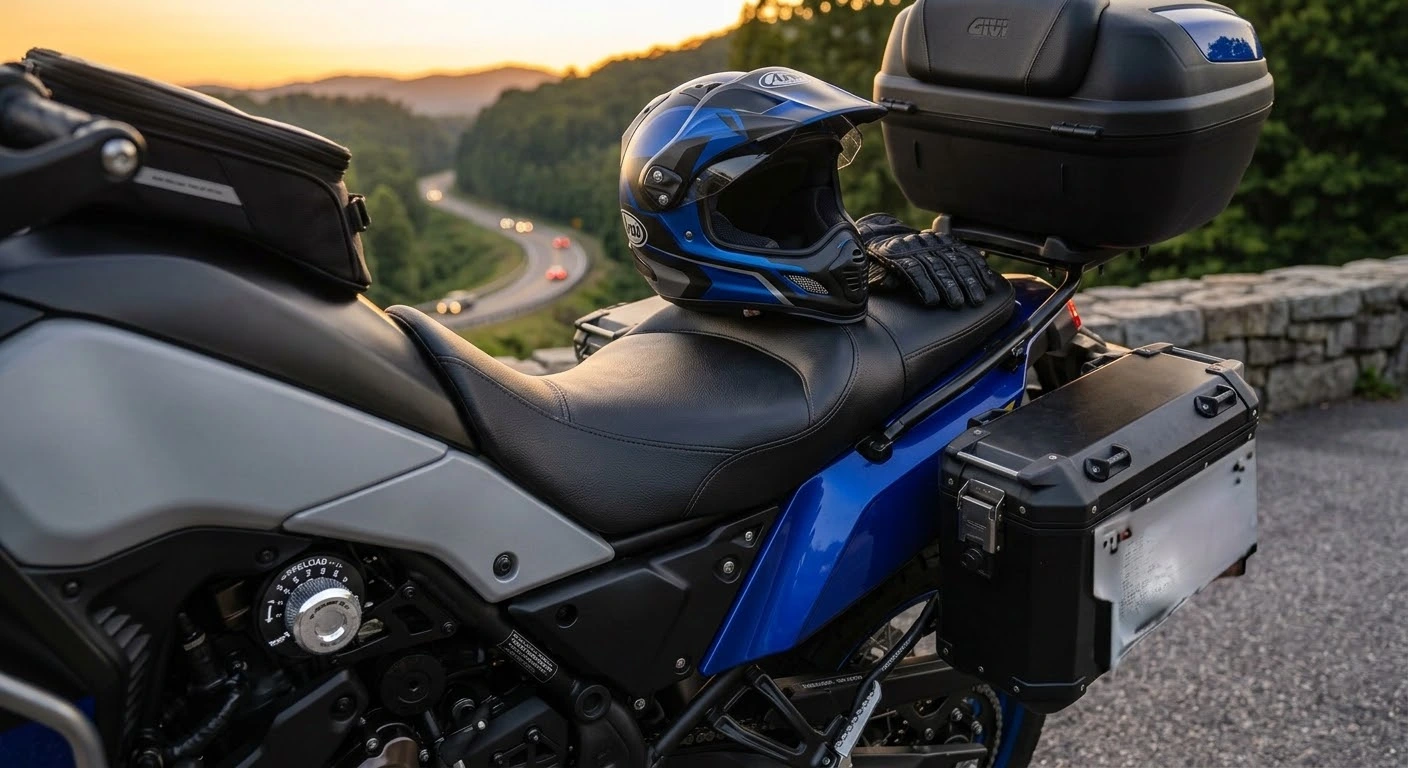
Taking a passenger along on a motorcycle ride across Virginia’s scenic highways offers a fantastic shared experience, but adding a second person dramatically alters your motorcycle’s handling dynamics. The extra weight shifts the chassis center of gravity, extends braking distances, softens rear suspension response, and changes lean characteristics through curves. Understanding the fundamentals of riding with a passenger what every rider should know ensures you make proper pre-ride mechanical adjustments, establish clear passenger safety rules, and maintain smooth control from mount to dismount.
Quick Inspection Checklist
| Passenger Prep Element | Mechanical / Operational Target | Recommended Action Standard |
|---|---|---|
| Focus Keyword | Riding with a Passenger What Every Rider Should Know | Featured in Title, Intro, H2 Headers, & Meta |
| Rear Tire Pressure | Increased load capacity | Inflate rear tire to max recommended cold PSI (per OEM manual) |
| Preload Suspension | Compress rear spring sag | Increase rear shock preload setting to prevent bottoming out |
| Headlight Vertical Aim | Tail-down chassis correction | Adjust headlight downward to offset rear sag angle |
| Passenger Gear (ATGATT) | Full rider-equivalent protection | DOT helmet, armored jacket, gloves, and over-the-ankle boots |
Adding passenger weight behind the rear axle alters the leverage exerted on the frame. This structural load shift changes how the chassis reacts during acceleration, braking, and cornering maneuvers.
   [ ADDED PASSENGER WEIGHT ON REAR SEAT ]
                     │
                     ▼
┌────────────────────────────────────────┐
│ Rear Suspension Compresses (Increases Sag)│ ◄── Raises Front End Geometry
└────────────────────┬───────────────────┘
                     │
                     ▼
┌────────────────────────────────────────┐
│ Front Wheel Contact Friction Lightens   │ ◄── Extends Braking Distance
└────────────────────┬───────────────────┘
                     │
                     ▼
   [ MUST ADJUST PRELOAD & COMPENSATE BRAKING ]
Increasing rear shock preload restores proper chassis geometry, keeping steering inputs predictable and preserving front-tire traction during emergency stops.
1. Perform Mechanical Chassis Adjustments
Before your passenger steps onto the footpegs, modify your motorcycle’s physical setup to handle the additional load:
- Increase Rear Suspension Preload: Stiffen the rear shock preload to compensate for the added weight. This prevents the rear end from squatting and preserves cornering clearance.
- Adjust Tire Inflation Pressures: Check the owner’s manual for two-up tire pressure specs. Rear tires usually require an extra 2 to 4 PSI when carrying a heavy load.
- Aim Headlights Downward: The weighted rear suspension lifts the headlight beam into the eyes of oncoming drivers. Adjust the beam pattern slightly downward.
2. Conduct a Pre-Ride Passenger Safety Briefing
Never assume a first-time passenger knows how to behave on a motorcycle. Establish clear instructions before starting the engine:
- Mounting & Dismounting Protocol: Instruct your passenger to wait for your explicit signal (with both feet firmly on the ground and front brake held) before stepping on the left footpeg to mount or dismount.
- Foot Position Discipline: Remind passengers to keep their feet on the footpegs at all times, even when stopping at traffic lights or intersection stops.
- Lean Neutrality: Teach the passenger to look over your inside shoulder into turns and stay centered with your spine rather than leaning away or fighting the curve.
3. Establish Clear Passenger Communication Signals
Engine and wind noise at highway speeds make verbal communication difficult without helmet communicators:
- Tap Signals: Agree on simple physical signals (e.g., a double tap on your right hip means “please slow down,” or a double tap on the left shoulder means “I need to pull over”).
- Holding On Securely: Instruct the passenger to hold onto your waist, hips, or integrated grab handles—never your arms, shoulders, or clothing.
4. Adapt Riding Technique & Braking Dynamics
Modifying control inputs creates a smooth, comfortable ride for both you and your passenger:
- Apply Brakes Earlier & Smoother: Extra momentum requires longer stopping distances. Roll onto front and rear brakes progressively to prevent helmet-clashing under hard braking.
- Execute Smooth Clutch Work: Ease out the clutch progressively during gear shifts to keep the motorcycle stable and avoid jerking your passenger’s head backward.
- Buffer Cornering Lean Angles: Enter turns at a controlled speed. Extra passenger weight lowers cornering clearance, making center stands or footpegs scrape the asphalt earlier.
Mastering riding with a passenger what every rider should know transforms two-up riding into a rewarding experience. Making precise chassis adjustments, briefing your passenger, and smoothing out your control inputs guarantees a safe ride along Virginia’s scenic highways.
Legal Disclaimer: This guide is provided for educational and informational purposes only. Operating a motorcycle with a passenger carries elevated handling risks. Ensure your motorcycle is equipped with factory passenger footpegs, a passenger seat, and that your motorcycle endorsement permits two-up riding.
Official & Credible Sources
- Motorcycle Safety Foundation (MSF) Guide to Carrying Passengers: https://msf-usa.org
- Virginia Department of Motor Vehicles (DMV) Motorcycle Manual: https://www.dmv.virginia.gov
- National Highway Traffic Safety Administration (NHTSA) Safety Tips: https://www.nhtsa.gov
Leave a Reply