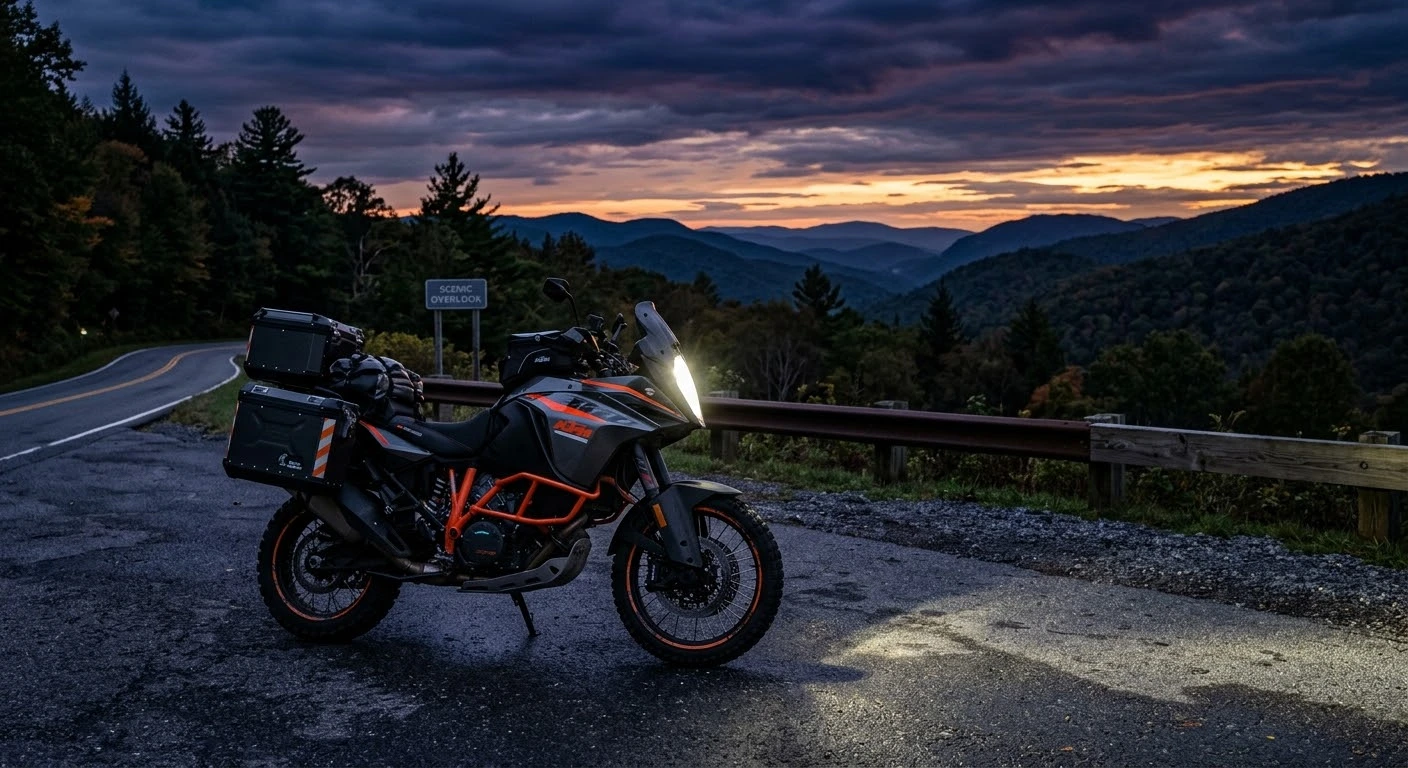
Riding a motorcycle after dark presents a distinct set of challenges for riders navigating urban corridors or dark rural highways across Virginia. Reduced natural sunlight severely compresses a rider’s field of vision, masks depth perception, and drastically decreases how quickly other motorists can identify a motorcycle on the road. Implementing proven strategies for riding at night visibility and safety tips for motorcyclists ensures you remain conspicuous to surrounding traffic, illuminate road hazards early, and maintain complete control under low-light conditions.
Quick Inspection Checklist
| Night Safety Component | Inspection Parameter | Standard Target / Action |
|---|---|---|
| Focus Keyword | Riding at Night Visibility and Safety Tips for Motorcyclists | Present in Title, Intro, H2s, & Meta |
| Optical Clarity | Clear Pinlock face shield | Clean, scratch-free, un-tinted shield for night use |
| Auxiliary Lighting | LED pod lights / Fog lamps | Properly aimed; wide beam pattern to cover shoulders |
| Gear Reflectivity | Micro-prismatic retro-reflective tape | 360-degree integration on helmet, jacket, and luggage |
| Visual Scanning | Oncoming glare mitigation | Focus on right fog line during passing oncoming traffic |
A motorcycle’s narrow single-headlight silhouette makes it difficult for oncoming drivers to estimate its distance and approach speed at night. Enhancing your bike’s lighting footprint transforms a single point of light into a recognizable triangle of visibility.
   [ ONCOMING VEHICLE DRIVER ]
                │
                ▼
┌──────────────────────────────────┐
│ Standard Single Headlight Profile│  ◄── Poor Distance & Speed Perception
└────────────────┬─────────────────┘
                 │
                 ▼
┌──────────────────────────────────┐
│ Add Low Auxiliary LED Fog Lights │  ◄── Creates "Lighting Triangle" Profile
└────────────────┬─────────────────┘
                 │
                 ▼
┌──────────────────────────────────┐
│ Enhanced Depth & Motion Recognition │ ◄── Drivers Recognize Motorcycle Early
└──────────────────────────────────┘
Forming a distinct lighting triangle by adding auxiliary lights mounted low on crash bars allows other motorists to instantly gauge your speed and proximity.
1. Upgrade & Precision-Aim Your Lighting System
Illuminating the road ahead without blinding oncoming drivers requires careful light management:
- Clean & Clear Lenses: Road grime, bug splatters, and lens oxidation reduce light output by up to 30%. Clean headlight lenses before every night trip.
- Aim Under Full Load: Adjust your headlight vertical aim while seated on the motorcycle with full gear and luggage to prevent the beam from pointing into the sky or too close to the front tire.
- Install Auxiliary LED Running Lights: Add secondary LED pods on the lower fork legs or engine guards to widen the light beam across road shoulders.
2. Maximize Passive Retro-Reflective Gear Coverage
Relying solely on active motorcycle lights leaves you vulnerable if side-swiped or stopped on a dark shoulder:
- 3M Scotchlite Retro-Reflective Panels: Wear jackets and pants featuring micro-prismatic materials that reflect vehicle headlights directly back to the source driver.
- Helmet Reflective Decals: Apply subtle, high-reflectivity decals to the rear and sides of your helmet. A rider’s helmet is the highest visual point on the bike.
- Luggage Rim Tape: Outline panniers and top cases with red or amber reflective rim tape to define your motorcycle’s full width to trailing vehicles.
3. Maintain Clear Optical Vision & Shield Integrity
Distorted vision creates eye fatigue and increases reaction times under low-light conditions:
- Switch to a Clear Face Shield: Never use tinted, transitional, or dark smoke visors after sunset. Always carry a clear visor or wear clear safety glasses.
- Eliminate Micro-Scratches: Scratches on a visor refract light from street lamps and oncoming traffic, creating blinding starburst patterns. Replace worn visors promptly.
- Anti-Fog Pinlock Inserts: Install a dual-pane Pinlock insert to eliminate shield fogging caused by evening temperature drops and breathing condensation.
4. Adjust Driving Tactics & Speed Margins
Adapting your riding style to low-light environments is critical for avoiding sudden obstacles:
- Avoid Outriding Your Headlights: Maintain a speed that allows you to come to a complete, controlled stop within the distance illuminated by your headlight beam.
- Increase Following Buffers: Expand your space cushion behind lead vehicles to 4-5 seconds, giving yourself extra time to react to sudden braking or road debris.
- Track Edge Lines Against Glare: When oncoming traffic approaches with bright high beams, look toward the right-hand fog line (white edge line) to preserve your night-adapted vision.
Applying these essential riding at night visibility and safety tips for motorcyclists maximizes your presence on dark roads while sharpening your reaction times. By optimizing your lighting setup, wearing reflective gear, and managing visual glare, you can enjoy nighttime riding safely and confidently.
Legal Disclaimer: This guide is provided for educational and informational purposes only. Night riding involves heightened risk due to reduced visibility. Always check local motor vehicle lighting compliance laws before modifying your motorcycle’s headlight system.
Official & Credible Sources
- Motorcycle Safety Foundation (MSF) Night Riding Guidelines: https://msf-usa.org
- National Highway Traffic Safety Administration (NHTSA) Visibility Advice: https://www.nhtsa.gov
- Virginia Department of Motor Vehicles (DMV) Driver Manual: https://www.dmv.virginia.gov
Leave a Reply