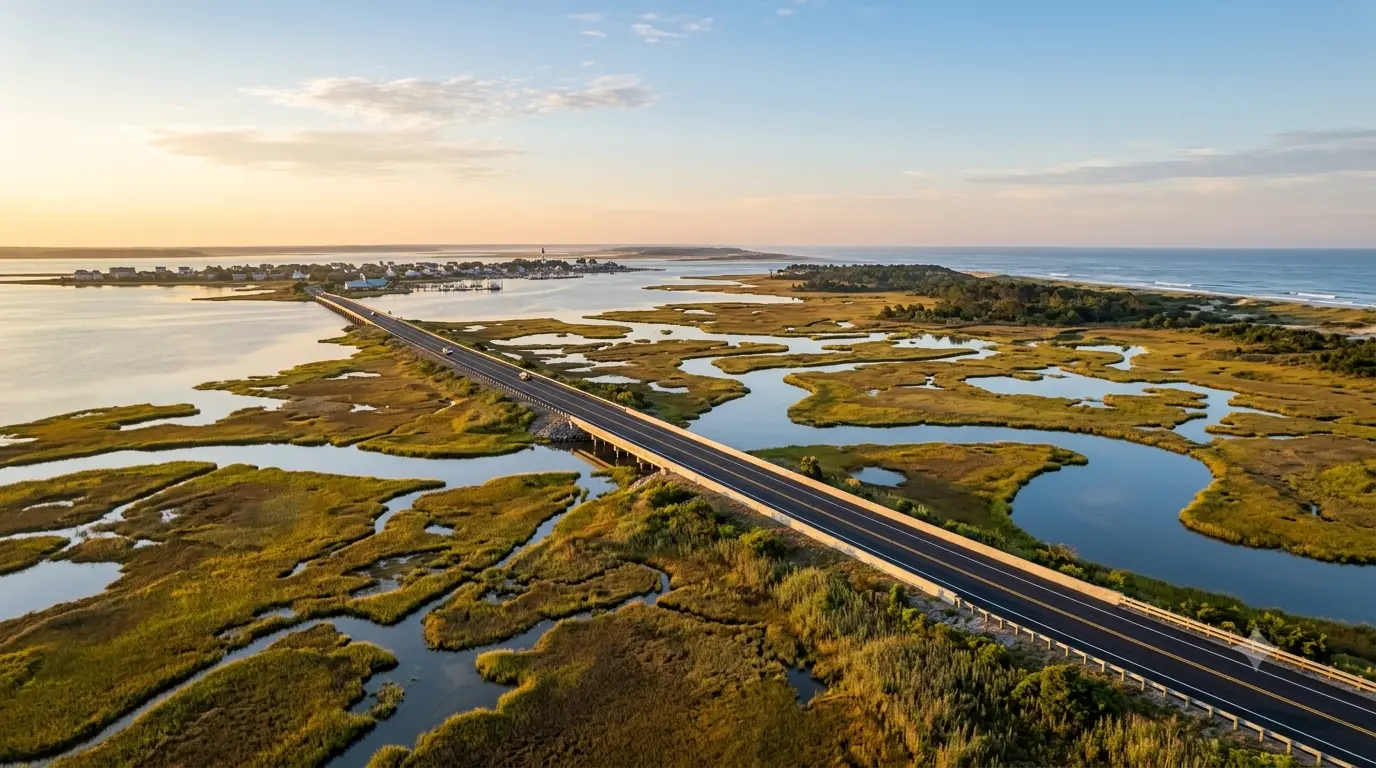
Stretching along the narrow peninsula between the Atlantic Ocean and the Chesapeake Bay, the Eastern Shore & Assateague motorcycle ride guide offers riders an unforgettable Atlantic coastal touring experience. Following US Route 13 and Route 175 out to Chincoteague and Assateague Island National Seashore, this corridor combines long, open highway sweeps, coastal marshland causeways, and maritime wildlife refuges. Featuring flat topography and ocean breezes, the Eastern Shore provides a serene coastal journey anchored by historic watermen villages and pristine coastal wildlife preserves.
Crucial Coastal Riding Conditions & Wildlife Hazards
Navigating Virginia’s Atlantic coastal barrier islands requires attention to wildlife encounters and maritime weather factors:
- 1. Wild Pony and Wildlife Crossings on Assateague Island:
The Assateague Island National Seashore and Chincoteague National Wildlife Refuge are home to wild ponies, deer, and migratory waterfowl. Riders must maintain strict adherence to low speed limits and scan roadside brush continuously. - 2. Crosswind Management on Causeways and Bridges:
Crossing open salt marshes along Route 175 and traversing the Chesapeake Bay Bridge-Tunnel (US 13) subjects motorcycles to severe coastal crosswinds. Maintain steady throttle input, lower your torso profile, and keep a strong lane position. - 3. Managing Salt Fog and Visor Residue:
Ocean spray and humid saline fog can coat helmet visors and mirrors with a thin salt film. Carry micro-fiber cleaning towels and keep windshield surfaces treated to maintain visual clarity during early morning rides. - 4. Tidal Flooding and Roadside Sand Accumulation:
High tides and coastal storms can wash seawater and fine white sand across causeway asphalt. Avoid sharp lean angles or heavy front braking on discolored or sand-covered road patches near coastal inlets.
Before embarking on coastal ocean trips, inspect your tire tread depth and electrical system using the complete pretrip motorcycle maintenance guide. Check tire pressures and rubber condition for wet coastal asphalt with motorcycle tire pressure and tread maintenance for mountain curves and slick asphalt. If exploring other Virginia coastal peninsulas, review route details in northern neck motorcycle coastal loop guide.
Conclusion: Virginia’s Premier Atlantic Coastal Passage
Studying this Eastern Shore & Assateague motorcycle ride guide arms riders with essential planning insights for exploring Virginia’s easternmost frontier. With vast marine horizons, unique coastal habitats, and smooth peninsula cruising, the Eastern Shore ride is an essential bucket-list coastal route.
Legal Disclaimer: This guide is provided for informational and route-planning reference only. Obey posted wildlife reserve speed limits, respect protected habitats, and monitor local bridge wind advisories.
Official & Credible Sources
- Virginia Department of Transportation (VDOT) — Eastern Shore & CBBT Travel Alerts: https://www.virginiadot.org
- National Park Service (NPS) — Assateague Island National Seashore Guide: https://www.nps.gov
- Virginia Tourism Corporation — Eastern Shore & Chincoteague Travel Guide: https://www.virginia.org
Enjoyed This Guide? Explore Related Virginia Touring Resources:
- Peninsula Loops: Explore the Rappahannock tidewater on northern neck motorcycle coastal loop guide.
- Valley Connectors: Tour central Virginia farmland routes in wintergreen to nellysford motorcycle backroads guide.
- Pre-Trip Safety: Inspect your machine before long coastal rides using the complete pretrip motorcycle maintenance guide.
- Tire Maintenance: Optimize tread grip and pressure for coastal humidity with motorcycle tire pressure and tread maintenance for mountain curves and slick asphalt.
- Mountain Pass Climbs: Master steep high-elevation curves on route 664 reeds gap motorcycle guide.
Leave a Reply