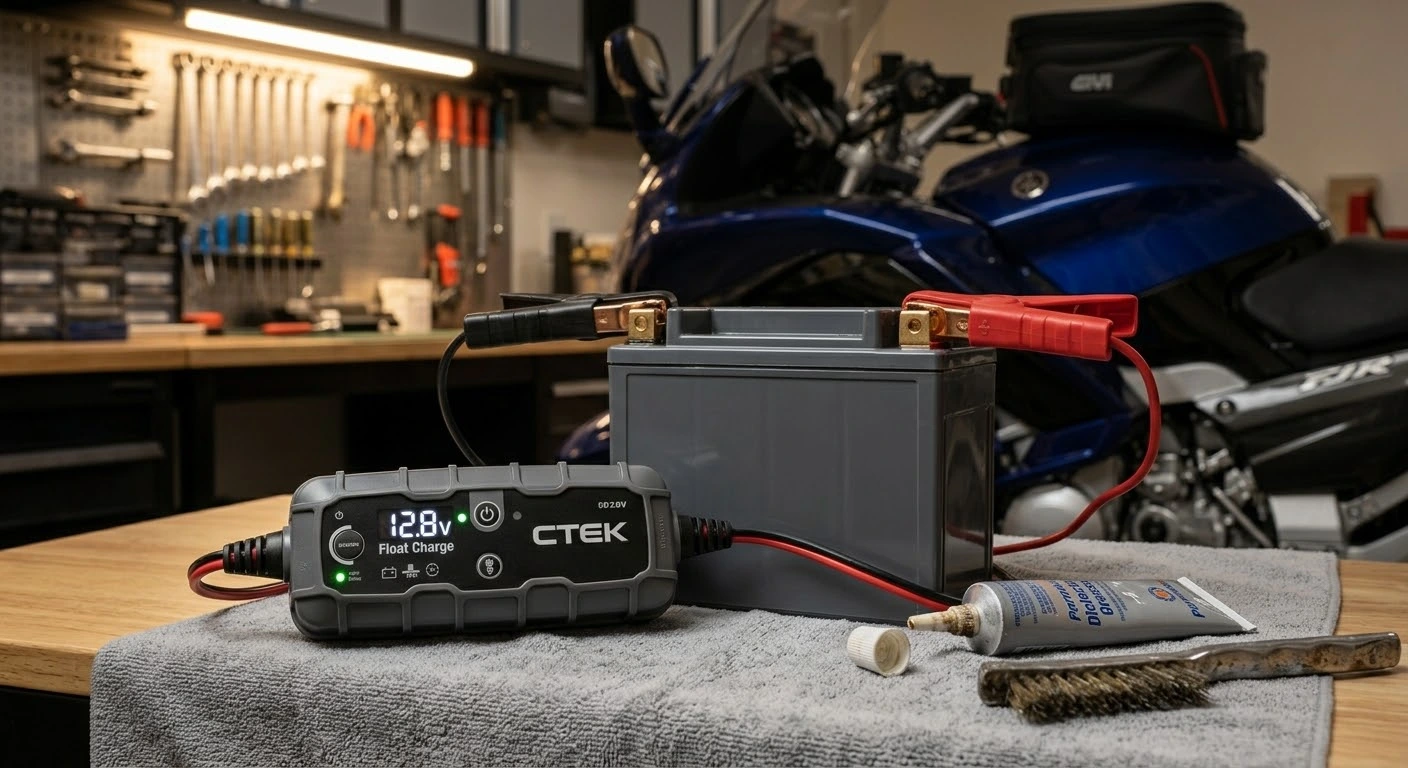
Cold weather is the single greatest enemy of motorcycle batteries. As ambient temperatures drop during the off-season, internal chemical reactions slow down significantly while parasitic loads from security systems or onboard computers continue to draw power. Following proper motorcycle battery maintenance and winter storage protocols prevents sulfation in lead-acid batteries, protects expensive lithium-ion cells from low-voltage freezing, and guarantees your motorcycle fires up effortlessly when spring arrives.
Battery Types & Specific Off-Season Care
Different battery chemistries require tailored maintenance approaches during prolonged storage:
- AGM & Sealed Lead-Acid (SLA): Highly susceptible to sulfation if left discharged below 12.4 volts. They require a continuous connection to a smart floating maintenance charger throughout the winter.
- Conventional Wet-Cell Batteries: Require periodic fluid level checks. Top off low cells strictly with distilled water before putting the battery into winter storage.
- Lithium-Ion (LiFePO4): Extremely low self-discharge rate, but vulnerable to permanent damage if charged in below-freezing temperatures. Disconnect the negative battery terminal and store it in a climate-controlled room around 50% to 70% charge state.
Step-by-Step Winter Battery Storage Routine
Protect your battery throughout the winter months by following these practical, step-by-step procedures:
- Clean Terminals & Inspect Cables: Remove corrosion or white lead-sulfate powder from the battery terminals using a wire brush and a mixture of baking soda and water. Coat the clean terminals with dielectric grease to block future oxidation.
- Remove the Battery from the Bike: If storing your motorcycle in an unheated garage or outdoor shed, remove the battery completely. Always disconnect the Negative (-) black cable first, followed by the Positive (+) red cable to prevent short circuits.
- Store in a Climate-Controlled Area: Place the battery on a wooden shelf or workbench inside a temperature-stable room. Avoid storing batteries directly on freezing concrete floors.
- Connect a Dedicated Smart Trickle Charger: Hook up a micro-processor controlled smart charger (tender) designed for your specific battery type. Smart chargers automatically monitor voltage, deliver float charges when needed, and shut off to prevent overcharging.
Taking the time for motorcycle battery maintenance and winter storage saves you money and eliminates the frustration of a dead battery on the first sunny day of spring. By cleaning terminals, storing your battery in a climate-controlled space, and using a smart tender, you protect your motorcycle’s electrical system year-round.
Legal Disclaimer: This maintenance guide is provided for educational purposes only. Battery chemistries and charging requirements vary. Always refer to your battery manufacturer’s safety manual and charger guidelines before servicing electrical components.
Official & Credible Sources
- Motorcycle Safety Foundation (MSF) Technical Guides: https://msf-usa.org
- Battery Council International (BCI) Care Standards: https://batterycouncil.org
- Yuasa Battery Maintenance & Storage Manuals: https://www.yuasabatteries.com
Leave a Reply