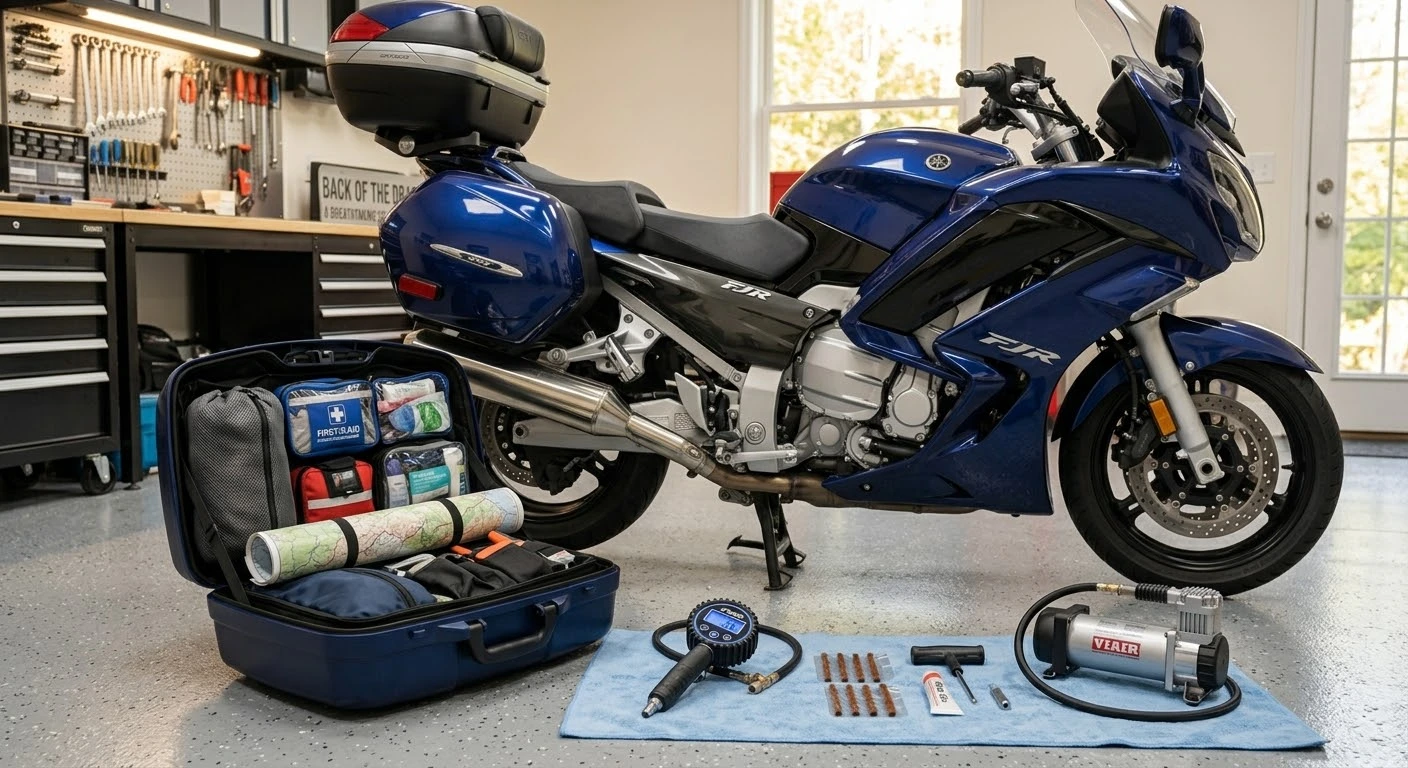
Embarking on a multi-day highway journey or across-state mountain adventure requires far more than packing a spare change of clothes. Mechanical failures in remote mountain passes can quickly derail a trip and compromise safety. Learning how to prepare your motorcycle for long-distance touring through systematic pre-ride inspections, ergonomic adjustments, and smart luggage packing ensures your machine runs smoothly across hundreds of consecutive miles.
Mechanical Pre-Trip Inspection & Fluid Checks
Executing a thorough mechanical check before departure prevents most common roadside breakdowns:
- Tire Condition & Pressure: Inspect tread depth across center and shoulder grooves. Inflate tires to the manufacturer’s recommended cold pressure for fully loaded touring. Look for hidden punctures, dry rot, or embedded road debris.
- Fluid Service: Check engine oil level, brake fluid clarity, and radiator coolant reserves. If your oil is near the end of its service life, perform a full oil change before setting out on long highway stretches.
- Brake System Inspection: Verify brake pad friction material thickness (minimum 2mm). Test lever resistance and ensure brake lines are free of cracks or swelling under pressure.
- Drive Chain & Belt Tension: Clean, lubricate, and adjust drive chain slack according to factory specs. Check sprockets for hooked teeth or excessive wear.
Ergonomics, Luggage Packing, and Emergency Prep
Long hours in the saddle demand ergonomic comfort and balanced luggage weight distribution:
- Balance Luggage Weight Distribution: Secure heavy tools and gear low in side panniers or saddlebags to keep your center of gravity stable. Place lighter items like rain gear or sleeping bags on higher rear racks.
- Optimize Riding Ergonomics: Adjust handlebar reach, clutch/brake lever angles, and highway peg positioning to reduce wrist and lower back fatigue during multi-hour highway stints.
- Pack a Dedicated Emergency Tool Kit: Carry a tire plug repair kit, a portable 12V air compressor, a compact multi-tool, spare fuses, zip ties, and electrical tape for quick roadside fixes.
- Ensure Full Legal & Safety Compliance: Verify that all headlights, turn signals, and brake lights function properly. Always ensure your gear complies with local traffic regulations, including state-mandated helmet and equipment rules.
Mastering how to prepare your motorcycle for long-distance touring turns a potentially stressful journey into a smooth, memorable adventure. By addressing mechanical maintenance early, balancing your luggage, and carrying basic repair supplies, you can ride across long distances with total confidence.
Legal Disclaimer: This guide is intended for educational and general maintenance planning purposes only. Torque specifications, fluid capacities, and inspection procedures vary by motorcycle model. Always consult your official owner’s manual before making mechanical adjustments.
Official & Credible Sources
- Motorcycle Safety Foundation (MSF) T-CLOCS Inspection Chart: https://msf-usa.org
- American Motorcyclist Association (AMA) Touring Advice: https://americanmotorcyclist.com
- Virginia Department of Transportation (VDOT) Travel Advisory: https://www.511virginia.org
Leave a Reply