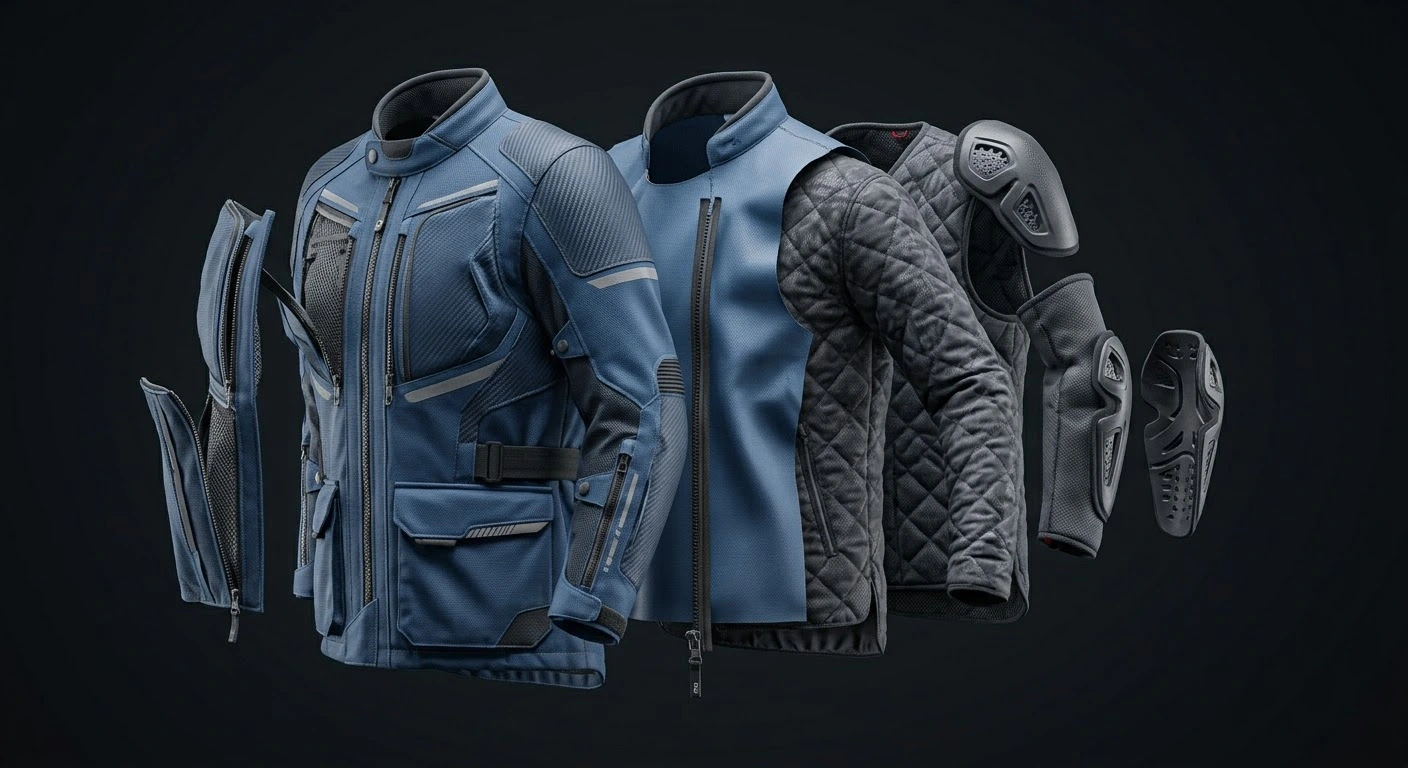
Riding across Virginia exposes motorcyclists to significant atmospheric contrasts. A single day’s ride can begin in chilly, morning mountain mist along Skyline Drive and end in humid afternoon heat across the Tidewater coastal plains. Protecting yourself against both road abrasion and rapid weather shifts requires careful gear selection. The debate between textile vs leather motorcycle jackets for Virginia’s variable climate comes down to balancing classic abrasion safety with multi-season thermal adaptability. Understanding how modern synthetic textiles and traditional cowhide leather handle moisture, ventilation, and impact armor ensures you stay comfortable and fully protected in any season.
Technical Performance Metrics: Textile vs. Leather
Review how each jacket construction performs across Virginia’s distinct weather conditions:
| Performance Characteristic | Textile Touring Jacket (Cordura/Gore-Tex) | Leather Riding Jacket (Cowhide/Goat) |
|---|---|---|
| Abrasion Resistance | High (500D–1000D Cordura standards) | Superior (Natural tensile fiber density) |
| Waterproofing & Rain | Built-in waterproof membranes & sealed zips | Absorbs water; requires separate rain outer shell |
| Climate Adaptability | Removable thermal liners & direct-vent zippers | Heavier; limited air ventilation in humid heat |
| Maintenance Needs | Machine washable; quick-drying synthetic fabric | Requires leather conditioner & specialized care |
Key Factors for Virginia Climate Riding
Evaluating physical properties helps determine which jacket style fits your seasonal touring route:
- 1. Abrasion Resistance and Impact Safety:
Leather remains the gold standard for pure slide protection due to its high tensile strength and natural resistance to friction tearing. However, high-density synthetic textiles like 1000D Cordura and Kevlar blends offer exceptional abrasion ratings that meet rigorous CE Level 2 safety standards while keeping the garment significantly lighter. - 2. Moisture Management and Rain Protection:
Virginia is known for sudden afternoon thunderstorms. Modern textile jackets feature laminated waterproof membranes (like Gore-Tex or Drystar) that keep rain out completely while allowing sweat vapor to escape. Raw leather absorbs rainwater, becoming heavy, cold, and slow to dry out overnight. - 3. Temperature Control and Airflow:
During hot Tidewater summers, textile jackets with zippered mesh intake and exhaust vents allow direct airflow across your core. Leather jackets offer excellent windblocking insulation for cold spring and autumn mountain rides, but can overheat quickly in slow-moving summer traffic. - 4. Versatility for Multi-Day Touring:
A three-layer textile jacket—featuring an outer shell, removable waterproof liner, and removable thermal liner—can handle a 40-degree morning temperature drop in the mountains without requiring extra bulky gear in your panniers.
Before setting out on multi-day highway journeys, ensure your bike is prepped for all weather conditions using the complete pre-trip motorcycle maintenance guide. If your itinerary crosses rainy mountain passes, review our recommendations in essential rain gear and wet-weather riding tips for motorcyclists. Additionally, verify that your riding gear complies with state safety rules in Virginia motorcycle laws 2026 helmets lane splitting and regulations.
Conclusion: Choose the Right Armor for Your Ride
Both textile and leather jackets offer distinct advantages for riding through the Commonwealth. If you prioritize maximum abrasion resistance and classic aesthetic style for cool, fair-weather riding, a quality leather jacket is an outstanding choice. If your tours span multiple days, changing elevations, and sudden rainfall, a versatile textile touring jacket provides the all-weather protection and ventilation needed for Virginia’s unpredictable climate.
Legal Disclaimer: This guide is provided for educational and equipment-evaluation purposes only. Always verify that riding jackets include certified CE Level 1 or Level 2 armor at the shoulders, elbows, and back.
Official & Credible Sources
- European Committee for Standardization (CEN) — EN 17092 Protective Motorcycle Garments Standard: https://www.cen.eu
- Cordura Advanced Fabrics — Synthetic Abrasion Resistance Data: https://www.cordura.com
- Motorcycle Safety Foundation (MSF) — Riding Gear Selection & Safety Tips: https://msf-usa.org
Enjoyed This Guide? Explore Related Virginia Touring Resources:
- Touring Boot Selection: Pair your jacket with climate-matched boots in best motorcycle boots for mountain and coastal touring waterproofing vs breathability.
- Helmet Comparison: Find the ideal lid for your jacket setup in modular vs full-face helmets for mountain touring safety comfort and noise comparison.
- Quiet Touring Lids: Learn more about sound isolation in the best motorcycle helmets for long-distance touring quietness ventilation and bluetooth integration.
- Coastal Highway Routes: Cruise the eastern shoreline with proper gear in scenic coastal motorcycle routes in Eastern Virginia and Tidewater.
- Rider-Friendly Lodging: Find accommodations with gear-drying amenities in top motorcycle friendly hotels and B&Bs in Virginia.
Leave a Reply