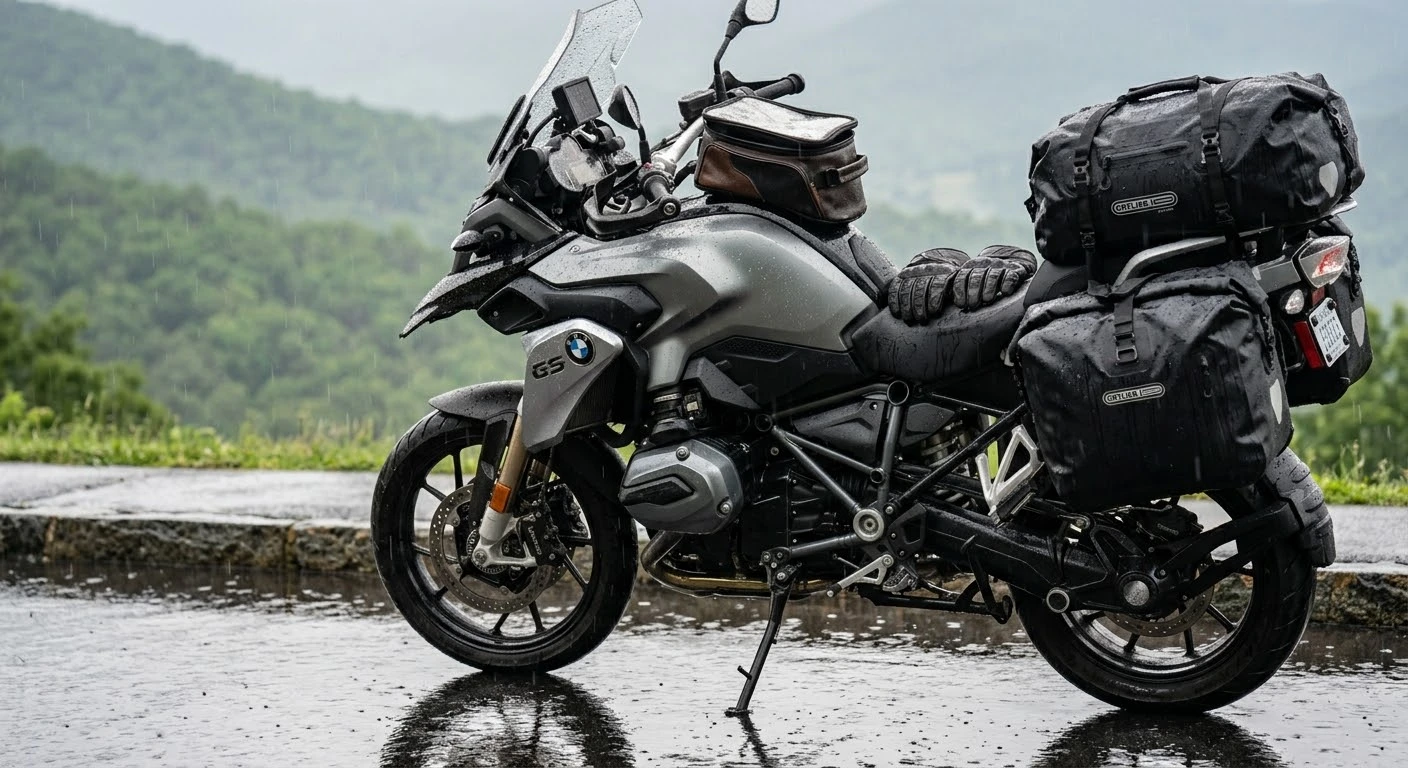
Riding through a sudden downpour along Virginia’s winding mountain corridors or coastal highways turns an ordinary motorcycle tour into a demanding test of equipment and skill. Wet-weather touring requires more than just pulling on a waterproof jacket; it demands a thorough understanding of reduced tire traction, visor defogging, and smooth control inputs. Mastering essential rain gear & wet-weather riding tips for motorcyclists ensures that sudden summer storms or continuous spring drizzles remain manageable aspects of your journey rather than hazardous roadside emergencies.
Wet-Weather Gear Specifications & Safety Metrics
Before heading into rainy forecasts, review the essential waterproof ratings and wet-asphalt management strategies in the comparative diagnostic table below:
| Rain Protection Gear / Technique | Essential Specification / Standard | Primary Function | Common Mistake to Avoid |
|---|---|---|---|
| Waterproof Outer Shell | Gore-Tex or 10,000mm+ rating | Prevents wind chill & body saturation | Wearing loose fabric that flaps in high wind |
| Visor Anti-Fog Insert | Pinlock lens or hydrophobic coating | Preserves clear optical vision | Wiping visor inside with dirty gloves |
| Waterproof Gloves & Boots | Breathable membrane & long gauntlets | Keeps extremities warm & fully functional | Tucking pant cuffs inside boot tops |
| Smooth Control Inputs | 50% lighter throttle/brake pressure | Prevents rear wheel spin & lockups | Sudden aggressive trail-braking on wet paint |
Choosing the Right Rain Gear for Motorcycle Touring
Staying warm and dry is directly linked to maintaining alertness and physical reaction speed on wet highways:
- 1. High-Performance Waterproof Outer Layer:
Invest in dedicated motorcycle rain suits or Gore-Tex jackets with sealed seams. High-visibility colors (neon yellow or reflective orange) are vital, as heavy rain drastically reduces visibility for surrounding motorists. - 2. Visor Clarity and Pinlock Inserts:
Fogging visors are an immediate safety hazard. Use a dual-pane Pinlock visor lens insert to eliminate interior condensation caused by cold rain and body heat. - 3. Waterproof Gloves and Gauntlets:
Wet hands rapidly lose dexterity. Choose insulated waterproof gloves with long gauntlet cuffs designed to fit over your jacket sleeves to prevent water from running down your arms. - 4. Waterproof Riding Boots:
Ensure boots feature breathable waterproof linings and oil-resistant rubber soles for confident foot placement at slick traffic stops.
Critical Wet-Weather Riding Techniques
Adapting your riding style to slick road surfaces requires conscious adjustments to lines and braking:
- Beware the First 15 Minutes: The initial minutes of rainfall wash up accumulated engine oil, grease, and road grime, creating exceptionally slick asphalt. Exercise extreme caution during the onset of a storm.
- Avoid Road Markings and Tar Snakes: Painted lane lines, crosswalk markings, manhole covers, and bitumen tar snakes become extremely slippery when wet. Keep your bike upright when crossing painted pavement or metal bridge grates.
- Smooth, Progressive Inputs: Apply throttle and brakes gradually. Abrupt braking or aggressive downshifting can easily snap tire traction on wet pavement.
- Follow Vehicle Tire Tracks: Drive in the tire tracks left by preceding cars where water has been temporarily swept away, reducing your risk of hydroplaning.
Before setting out on long-distance tours through unpredictable weather, inspect your tires using the complete pre-trip motorcycle maintenance guide and ensure your braking components are in top condition with our motorcycle brake pad replacement DIY step-by-step maintenance. Additionally, verify your rain gear and helmet standards meet state riding regulations by reviewing Virginia motorcycle laws 2026 helmets lane splitting and regulations.
Conclusion: Ride Confident in All Conditions
Equipping yourself with high-quality waterproof gear and practicing smooth, deliberate control inputs turns rainy touring days into safe, rewarding experiences. Check weather radar forecasts, respect reduced traction limits, stay visible, and enjoy the open road regardless of rainfall.
Legal Disclaimer: This guide is provided for educational and safety training purposes only. Always pull over to a safe location if heavy rain, severe lightning, or extreme flooding compromises your safety.
Official & Credible Sources
- Motorcycle Safety Foundation (MSF) — Wet-Weather Riding Strategies: https://msf-usa.org
- National Highway Traffic Safety Administration (NHTSA) — Motorcycle Safety & Visibility: https://www.nhtsa.gov
- American Motorcyclist Association (AMA) — Rain Gear & Touring Safety: https://americanmotorcyclist.com
- Federal Highway Administration (FHWA) — Wet Pavement Friction & Hydroplaning Research: https://highways.dot.gov
Leave a Reply