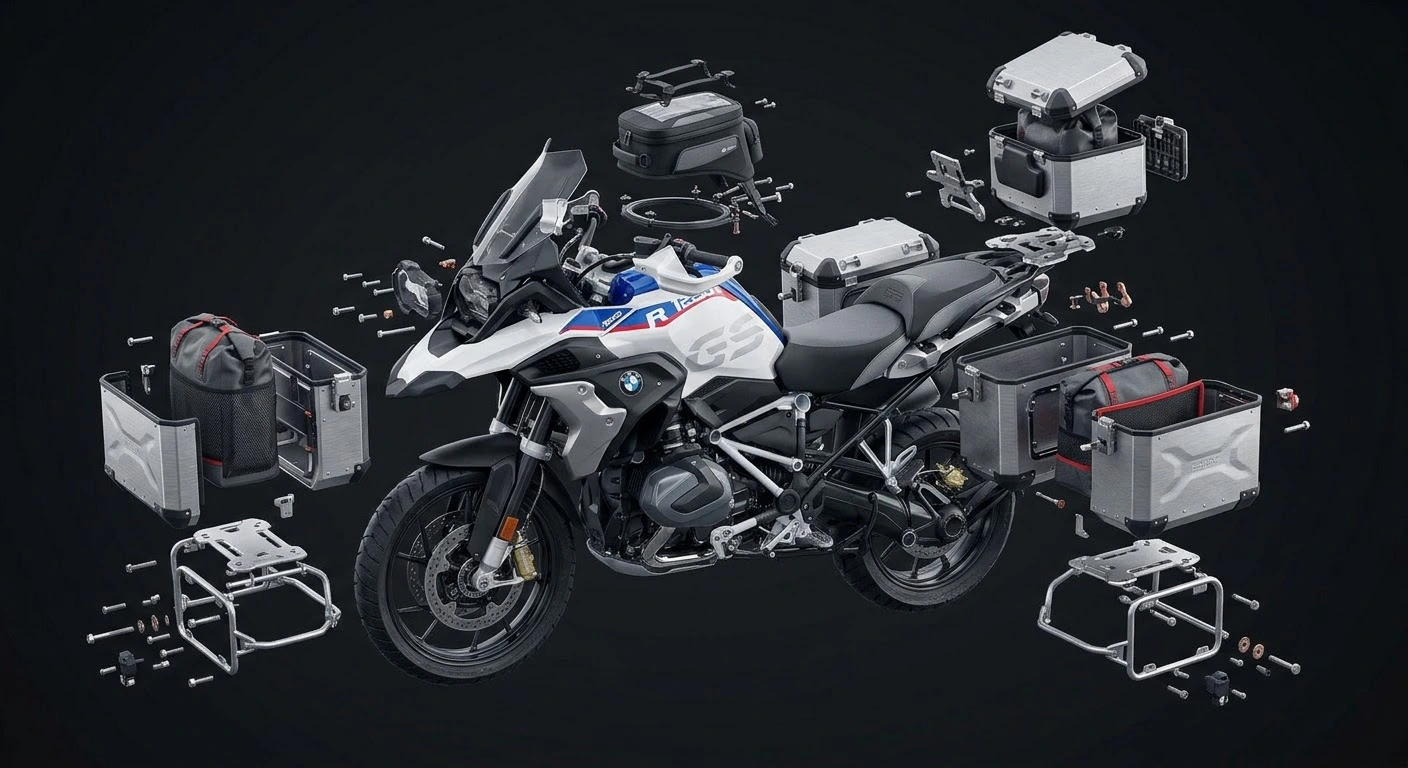
Embarking on multi-day touring trips through tight mountain passes requires carrying extra gear, tools, and personal supplies. Proper motorcycle luggage packing and weight distribution for mountain stability is critical to maintaining predictable cornering, stable braking, and effortless turn-in on steep switchbacks. Overloading a top case or packing side panniers unevenly drastically alters your motorcycle’s center of gravity, causing front-wheel light-headedness, high-speed weave, and dangerous wallowing through technical bends. Mastering heavy-item placement ensures your suspension operates effectively across Virginia’s mountain corridors.
Weight Distribution Dynamics & Packing Hierarchy
Understand how gear placement directly impacts motorcycle geometry and cornering stability:
| Packing Zone / Position | Recommended Gear Types | Impact on Center of Gravity (CoG) | Stability Risk if Mismanaged |
|---|---|---|---|
| Tank Bag (Lowest & Central) | Heavy items: tools, spare batteries, tire repair kit | Lowers CoG; improves front tire traction | Steering resistance if excessively heavy |
| Side Panniers (Low & Forward) | Clothing, camping gear, fluids split evenly | Keeps weight centered near swingarm pivot | High-speed wobble if left/right weight is uneven |
| Top Case / Tail Bag (High & Rear) | Lightweight gear: sleeping bag, rain suit, jacket | Elevates CoG; lightens front-wheel grip | Handlebar shake & severe rear suspension sagging |
Step-by-Step Packing Rules for Mountain Cornering
Applying strategic packing physics before setting out preserves machine handling and chassis geometry:
- 1. Keep Heavy Items Low and Centered:
Place heavy steel tools, spare fluids, and tire pumps inside a tank bag or at the very bottom of side panniers close to the bike’s centerline. Storing heavy equipment low prevents lever action that destabilizes the bike when leaning into sharp switchbacks. - 2. Balance Pannier Weight Left-to-Right:
Use a portable luggage scale to verify that side panniers carry nearly identical weight. A weight imbalance of just 5 to 10 pounds between left and right panniers causes subtle chassis pulling, forcing constant counter-steering correction through sweeping mountain curves. - 3. Avoid Overloading the Rear Top Case:
Top cases sit far behind the rear axle and elevated above the seat line. Limit top case contents to light, bulky items like rain gear or sleeping pads. Overloading the top case lightens front-end mechanical grip, inducing front wheel drift during uphill acceleration. - 4. Adjust Rear Suspension Preload for Payload:
Adding 30 to 80 pounds of luggage compresses rear suspension sag. Increase rear shock preload settings according to your owner’s manual to restore original chassis geometry, maintain proper headlight aiming, and prevent cornering clearance loss.
Before packing for long multi-day mountain routes, inspect your electrical setup with motorcycle battery care and troubleshooting in cold and hot weather touring. Ensure your drive system is fully prepped using how to clean, adjust, and lube your motorcycle drive chain on long road trips. Additionally, check your tire pressures against extra payload using motorcycle tire pressure and tread maintenance for mountain curves and slick asphalt.
Conclusion: Centered Mass, Uncompromised Handling
Mastering motorcycle luggage packing and weight distribution for mountain stability guarantees that carrying tour gear does not ruin your riding enjoyment. Keep heavy objects low and forward, balance pannier loads precisely, and tune your suspension preload before departing. With a balanced payload and low center of gravity, you will carve through Virginia’s mountain switchbacks with smooth precision and complete confidence.
Legal Disclaimer: This guide is provided for educational and luggage packing guidance only. Always consult your motorcycle owner’s manual for maximum Gross Vehicle Weight Rating (GVWR) and individual rack weight limits.
Official & Credible Sources
- Motorcycle Safety Foundation (MSF) — Carrying Passengers, Cargo, and Luggage Guide: https://msf-usa.org
- BMW Motorrad — Rider Manuals & Suspension Preload Adjustment Standards: https://www.bmwmotorcycles.com
- National Highway Traffic Safety Administration (NHTSA) — Motorcycle Load & Handling Safety: https://www.nhtsa.gov
Enjoyed This Guide? Explore Related Virginia Touring Resources:
- Battery Maintenance: Manage auxiliary electrical draws from touring gear using motorcycle battery care and troubleshooting in cold and hot weather touring.
- Chain Care Guide: Maintain smooth drive-line power under heavy payload with how to clean adjust and lube your motorcycle drive chain on long road trips.
- Tire Pressure Guide: Adjust rubber inflation specs for luggage loads in motorcycle tire pressure and tread maintenance for mountain curves and slick asphalt.
- Jacket Selection: Dress for shifting touring weather with textile vs leather motorcycle jackets for virginia climate.
- Rider Friendly Lodging: Find accommodations with easy unloading access in top motorcycle friendly hotels and b&bs in virginia.
Leave a Reply