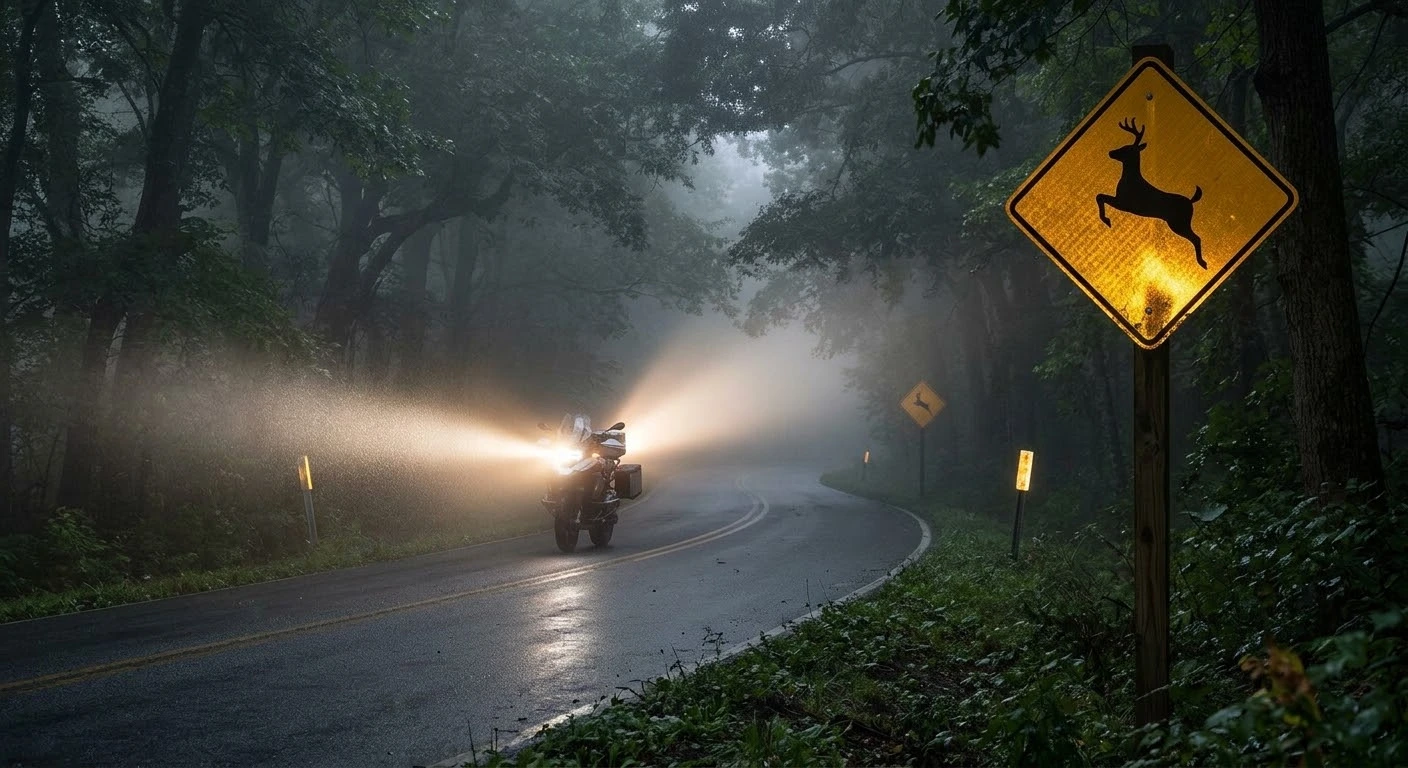
Navigating Virginia’s lush forest corridors and mountain passes offers scenic freedom, but it also brings a significant seasonal hazard: wildlife crossings. Reviewing a comprehensive deer collision avoidance guide for Virginia motorcyclists is essential for anyone riding through the Blue Ridge, Shenandoah Valley, or rural Piedmont backroads. Virginia consistently ranks among the top states in the nation for deer-vehicle strikes, with peak risks occurring during the autumn mating season (October through December). Understanding deer behavior, mastering scan patterns, and refining emergency braking skills can dramatically lower your chances of an unexpected roadside encounter.
Wildlife Risk Factors & Peak Hazard Times
Recognize the critical variables that increase wildlife collision probability across Virginia routes:
| Risk Variable | Peak Danger Window | High-Risk Locations | Primary Mitigation Strategy |
|---|---|---|---|
| Daily Time Frame | Dusk to Dawn (5:00 AM – 8:00 AM & 5:00 PM – 9:00 PM) | Forest edges, rural farm fields, river crossings | Lower speed by 10-15 mph; cover brake levers |
| Seasonal Peak | October through December (Rutting / Mating Season) | Heavily wooded highways (I-81, Route 211, Skyline Drive) | High-beam usage; scan treelines continuously |
| Animal Group Behavior | Single deer spotted near road shoulder | Blind turns, dip valleys, rural intersections | Assume more deer follow immediately behind |
Essential Tactical Techniques for Avoiding Deer Strikes
Applying active defensive riding tactics gives you critical reaction time when wildlife steps into your lane:
- 1. Master Continuous Treeline Scanning:
Avoid fixing your eyes straight down the asphalt. Scan continuously from fence-line to treeline on both sides of the highway. Look for the reflective shine of eyes in your headlight beam or sudden shadows breaking the roadside foliage. - 2. The “Where There Is One, There Are More” Rule:
White-tailed deer rarely travel alone. If a deer leaps across the asphalt ahead of you, immediately brake hard and prepare for a second or third deer to jump directly out from the exact same entry point. - 3. Effective Emergency Braking and Swerving:
If a collision appears imminent, apply maximum straight-line braking using both front and rear brakes without locking the wheels. Only execute a defensive swerve if you have a clear, paved escape route; swerving blindly into oncoming traffic or soft road shoulders creates a far more severe crash risk. - 4. Maximize Auxiliary Lighting and Horn Use:
Ride with high beams whenever opposing traffic permits to illuminate side margins. If you spot a deer standing near the shoulder, sound a long horn blast; erratic flashing lights alone may freeze the animal in place rather than scaring it away.
Before riding through densely wooded mountain routes, ensure your motorcycle handling and braking components are operating at peak efficiency using the complete pre-trip motorcycle maintenance guide. If your itinerary involves extra luggage weight, review proper chassis balancing in motorcycle luggage packing and weight distribution for mountain stability. Additionally, check that your tires provide maximum emergency stopping grip using motorcycle tire pressure and tread maintenance for mountain curves and slick asphalt.
Conclusion: Vigilance Protects Your Ride
Studying this deer collision avoidance guide for Virginia motorcyclists provides the tactical awareness needed to enjoy scenic rural highways safely. By reducing speeds during dawn and dusk, scanning shoulder corridors continuously, and maintaining full control during hard emergency stops, you can navigate Virginia’s wildlife-rich countryside with complete confidence.
Legal Disclaimer: This guide is provided for educational and safety awareness purposes only. Always ride within posted speed limits and adjust speed according to road conditions and visible hazards.
Official & Credible Sources
- Virginia Department of Wildlife Resources (DWR) — Deer Activity & Highway Safety Data: https://dwr.virginia.gov
- Motorcycle Safety Foundation (MSF) — Animals and Road Hazards Avoidance Guide: https://msf-usa.org
- Virginia Department of Transportation (VDOT) — Wildlife Crossing & Crash Statistics: https://www.virginiadot.org
Enjoyed This Guide? Explore Related Virginia Touring Resources:
- Luggage Packing: Maintain chassis balance for emergency stops with motorcycle luggage packing and weight distribution for mountain stability.
- Battery Care: Keep auxiliary riding lights powered using motorcycle battery care and troubleshooting in cold and hot weather touring.
- Drivetrain Maintenance: Ensure smooth throttle response with how to clean adjust and lube your motorcycle drive chain on long road trips.
- Tire Maintenance: Maximize emergency stopping grip in motorcycle tire pressure and tread maintenance for mountain curves and slick asphalt.
- Jacket Selection: Wear high-visibility protective gear from textile vs leather motorcycle jackets for virginia climate.
Leave a Reply