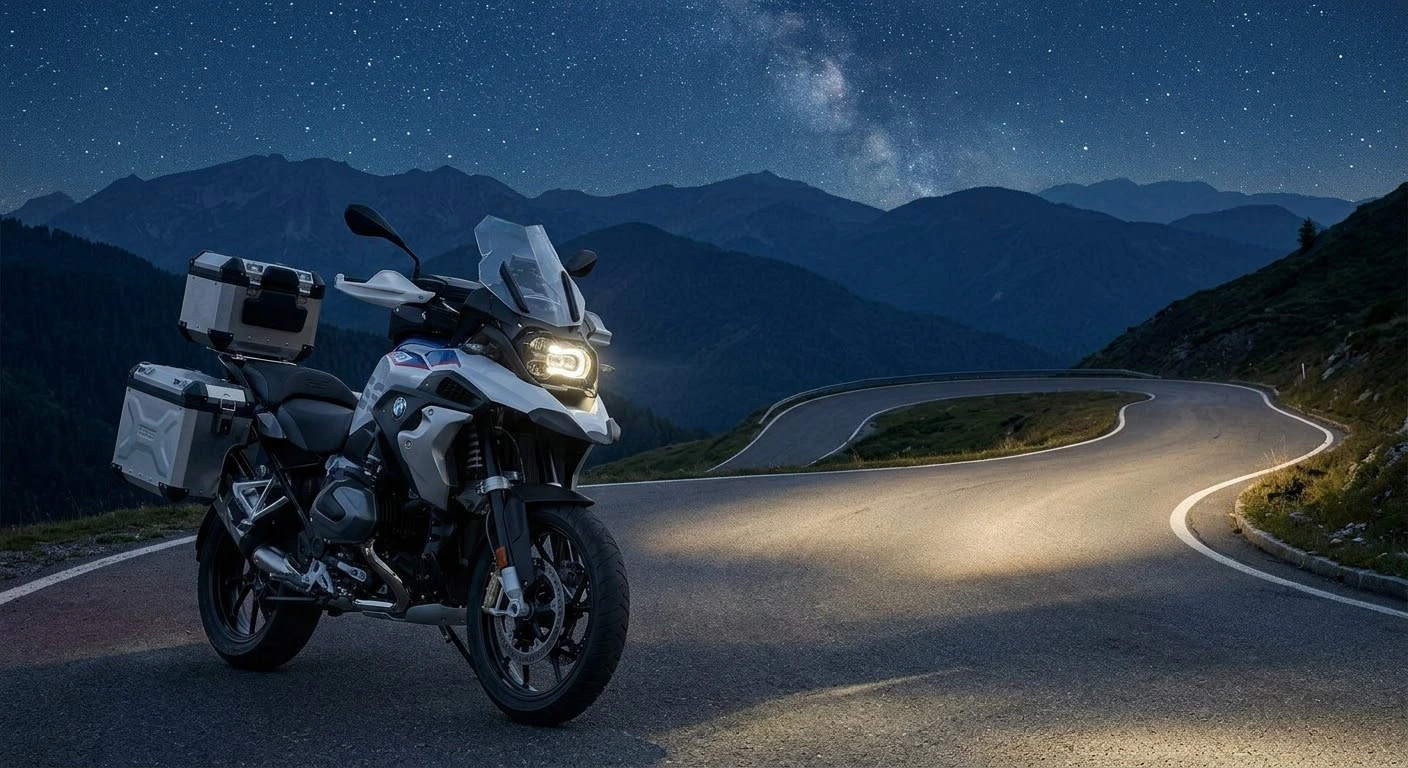
Roughly half of all fatal motorcycle crashes nationally occur after dark, despite night riding accounting for a much smaller share of total miles ridden—and Virginia’s unlit rural highways, mountain switchbacks, and dense deer population make the risk gap even wider.
Night riding through the Blue Ridge Parkway, Skyline Drive, or the back roads of the Shenandoah Valley delivers some of the most peaceful, traffic-free miles in the state, but only for riders who understand how darkness changes visibility, reaction time, and hazard recognition. This guide breaks down the practical adjustments every Virginia rider should make before the sun goes down.
Night Riding in Virginia at a Glance
| Hazard / Metric | Risk Level & Impact | Primary Mitigation Strategy |
|---|---|---|
| Fatality Rate | ~50% of national fatal crashes occur at night | Slow down, increase following distance |
| Wildlife Activity | Extreme (Deer rut, dusk/dawn active hours) | Scan road shoulders with auxiliary LED lights |
| Unlit Backroads | High (Zero ambient street lighting on mountain passes) | Clean visor, upgrade to high-lumen headlights |
| Temperature Drops | Moderate to High (Ridgetop elevation cooling) | Wear windproof layers and anti-fog visors |
Key Night Riding Hazards in Virginia
1. Overdriving Your Headlight
The most common mistake night riders make is traveling at a speed where their stopping distance exceeds the reach of their headlight beam. If your beam illuminates 150 feet ahead, but your total reaction and braking distance at 55 mph is 180 feet, you are riding blind into whatever lies past your light beam.
2. High-Risk Wildlife Corridors
Virginia ranks among the top states for deer collisions. White-tailed deer are crepuscular and nocturnal, making unlit rural stretches along the Shenandoah Valley and Southside Virginia prime collision zones after sunset.
3. Visor Glare and Reduced Contrast
Scratched, tinted, or dirty visors refract oncoming headlights into severe glare, wiping out your night vision and making it impossible to spot gravel, potholes, or wet patches on unlit turns.
Step-by-Step Rules for Safe Night Riding
- Switch to a Clear Anti-Fog Visor: Never ride after dark with a tinted, mirrored, or smoke visor. Carry a clear face shield equipped with an anti-fog Pinlock insert.
- Upgrade Your Lighting Setup: Replace dim stock halogen bulbs with high-output LED headlights or add broad-beam auxiliary driving lights to sweep ditches and shoulders.
- Slow Down by 10–15 MPH: Reduce your cruising speed on unlit two-lane roads to align your stopping distance with your illuminated headlight horizon.
- Increase Following Distance: Expand your cushion behind lead vehicles to 4–5 seconds to spot hazards or sudden braking ahead of time.
- Use Lead Vehicles as Pathfinders: Position yourself safely behind a car or truck, using their headlights to reveal upcoming road curves, debris, and animal movements.
Questions
Is it legal to use tinted visors at night in Virginia?
While Virginia law mandates eye protection, riding with a tinted shield after dark severely impairs visibility and violates basic road safety standards. Always carry a clear visor for night rides.
What is the best lighting upgrade for night riding in Virginia?
Auxiliary LED lights mounted low on crash bars or forks provide the best lateral light spread, illuminating ditch edges and shoulders where deer usually hide.
Final Takeaway
Night riding in Virginia offers quiet roads and breathtaking starlit ridgelines, but it forgives very few mistakes. Lower your speed, upgrade your lighting, keep your visor crystal clear, and ride well within your headlight coverage.
Sources
- National Highway Traffic Safety Administration (NHTSA)
- Motorcycle Safety and Night Driving Statistics
- https://www.nhtsa.gov
- Virginia Department of Transportation (VDOT)
- Nighttime Rural Road Driving & Wildlife Safety Guidelines
- https://www.virginiadot.org
Legal Disclaimer
This guide is provided strictly for educational and safety awareness purposes. Night riding involves inherent risks. Road conditions, wildlife presence, and weather can change instantly. Riders are responsible for maintaining their equipment, adjusting speeds to conditions, and obeying all Virginia traffic regulations. MotorcycleVirginia.com assumes no liability for injuries or damages.
Enjoyed This Guide? Explore Related Virginia Touring Resources:
- Luggage Packing: Maintain chassis balance for emergency stops with motorcycle luggage packing and weight distribution for mountain stability.
- Battery Care: Keep auxiliary riding lights powered using motorcycle battery care and troubleshooting in cold and hot weather touring.
- Drivetrain Maintenance: Ensure smooth throttle response with how to clean adjust and lube your motorcycle drive chain on long road trips.
- Tire Maintenance: Maximize emergency stopping grip in motorcycle tire pressure and tread maintenance for mountain curves and slick asphalt.
- Jacket Selection: Wear high-visibility protective gear from textile vs leather motorcycle jackets for virginia climate.
Leave a Reply