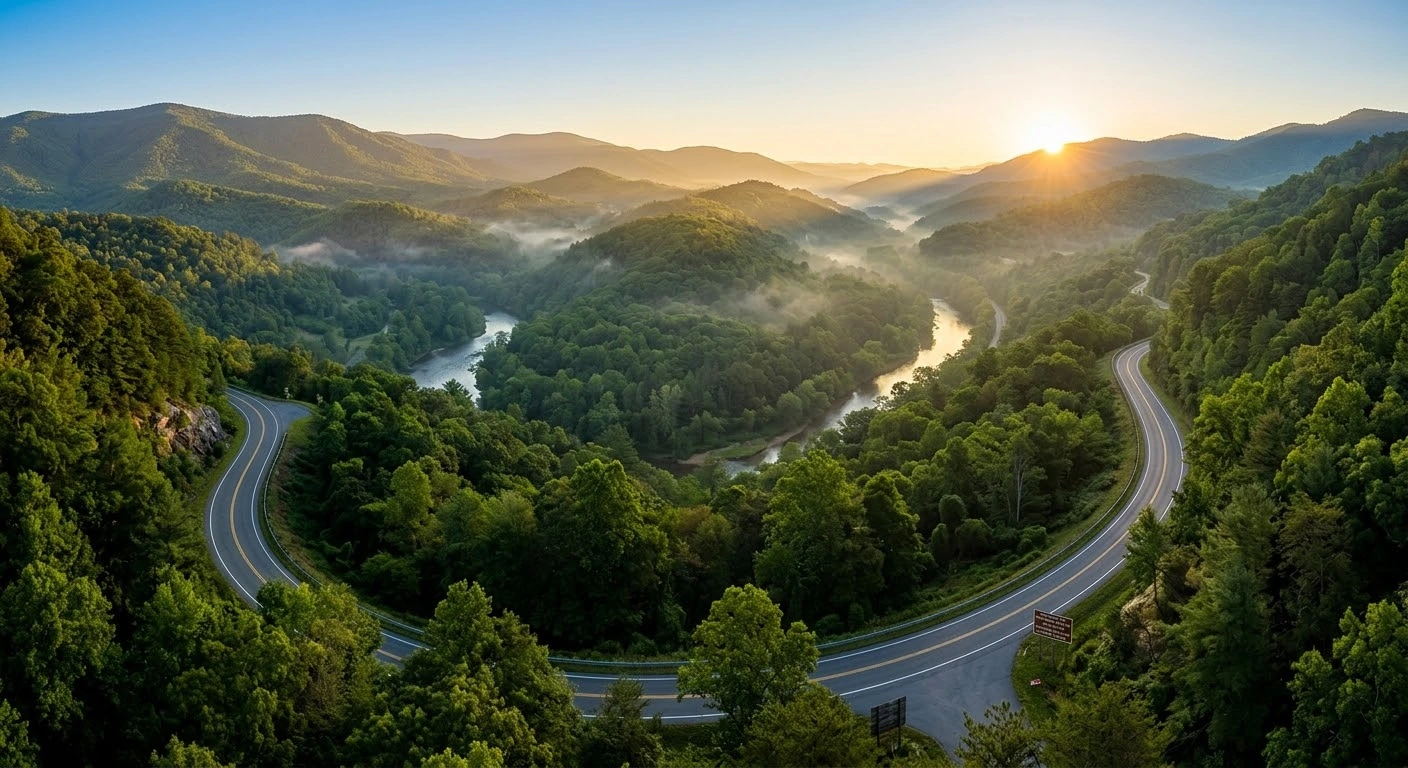
Stretching vertically through Western Virginia, US Route 220 offers one of the most rewarding and scenic backcountry road trips in the Mid-Atlantic. Reading a dedicated Route 220 motorcycle guide to Virginia’s scenic mountain ride equips riders with essential turn-by-turn insights, pavement quality expectations, and stopover highlights. From the historic mineral springs around Clifton Forge and Covington down through the rolling Allegheny Highlands into the Roanoke Valley, Route 220 delivers a perfect blend of sweeping mountain curves, historic river valleys, and relaxed rural riding away from heavy interstate highway congestion.
Key Route 220 Touring Segments & Highlights
Explore the distinct road sections and geographic highlights along Virginia’s Route 220 corridor:
| Route Segment | Distance & Terrain | Notable Highlights | Cornering & Road Character |
|---|---|---|---|
| Highland & Bath County Pass | ~45 miles (Monterey to Warm Springs) | Thermal springs, historic inns, deep forest cuts | Tight elevation shifts; smooth technical turns |
| Alleghany Highlands Run | ~30 miles (Falling Spring to Covington) | Falling Spring Falls, Jackson River views | Sweeping valley curves along river bends |
| Roanoke to Blue Ridge Foothills | ~50 miles (Roanoke south to Rocky Mount) | Blue Ridge Parkway access, rural farmland | Open multi-lane sections transitioning to curves |
Essential Riding Tips for US Route 220
Executing a smooth multi-day tour along Route 220 requires strategic planning and keen road awareness:
- 1. Plan Stops at Natural Landmarks:
Do not miss Falling Spring Falls just north of Covington—a breathtaking 80-foot natural waterfall viewable directly from a roadside pull-off. Further north, Warm Springs and Monterey offer quiet historic towns ideal for lunch, fuel refills, and local coffee stops. - 2. Watch for Wildlife in River Valleys:
Route 220 parallels lush water channels and dense timberlands, making it a prime corridor for deer and wild turkey crossings, particularly during dawn and dusk hours. Maintain disciplined scanning along forest shoulders. - 3. Manage Suspension and Luggage Weight:
The northern mountain sections feature sudden mid-corner camber shifts and undulating asphalt. Ensure your suspension preload and baggage weight are correctly adjusted to prevent wallowing through tight switchbacks. - 4. Secure Your Motorcycle Overnight:
If booking overnight stays in historic mountain inns or valley B&Bs along Route 220, practice sound security habits by using rotor disc locks and locking your steering head.
Before setting out on your Route 220 expedition, review proper wildlife hazard awareness in deer collision avoidance guide for Virginia motorcyclists. Ensure your luggage setup maintains proper chassis balance using motorcycle luggage packing and weight distribution for mountain stability. Additionally, safeguard your machine during overnight hotel stays with motorcycle anti-theft guide: best security practices for Virginia riders.
Conclusion: A Classic Appalachian Highway Journey
Exploring this Route 220 motorcycle guide to Virginia’s scenic mountain ride unlocks a quintessential Appalachian touring experience. With its smooth river-carved curves, dramatic mountain ridges, and abundant historical stopovers, US Route 220 stands as a must-ride corridor for any rider seeking authentic Virginia mountain freedom.
Legal Disclaimer: This guide is intended for travel planning and touring reference only. Always obey posted speed limits, monitor local weather conditions, and ride according to your skill level.
Official & Credible Sources
- Virginia Department of Transportation (VDOT) — US 220 Route Travel Alerts & Road Conditions: https://www.virginiadot.org
- Virginia Tourism Corporation — Allegheny Highlands & Shenandoah Valley Travel Guide: https://www.virginia.org
- National Park Service (NPS) — Blue Ridge Parkway & Mountain Passes: https://www.nps.gov
Enjoyed This Guide? Explore Related Virginia Touring Resources:
- Wildlife Safety: Avoid animal hazards along river corridors with deer collision avoidance guide for Virginia motorcyclists.
- Luggage Setup: Balance your payload for mountain switchbacks in motorcycle luggage packing and weight distribution for mountain stability.
- Security Practices: Protect your machine at mountain inns using motorcycle anti theft guide best security practices for virginia riders.
- Pre-Trip Checklist: Inspect brakes and fluids prior to departure with the complete pretrip motorcycle maintenance guide.
- Rider Lodging: Find welcoming stays along your route in top motorcycle friendly hotels and b&bs in virginia.
Leave a Reply