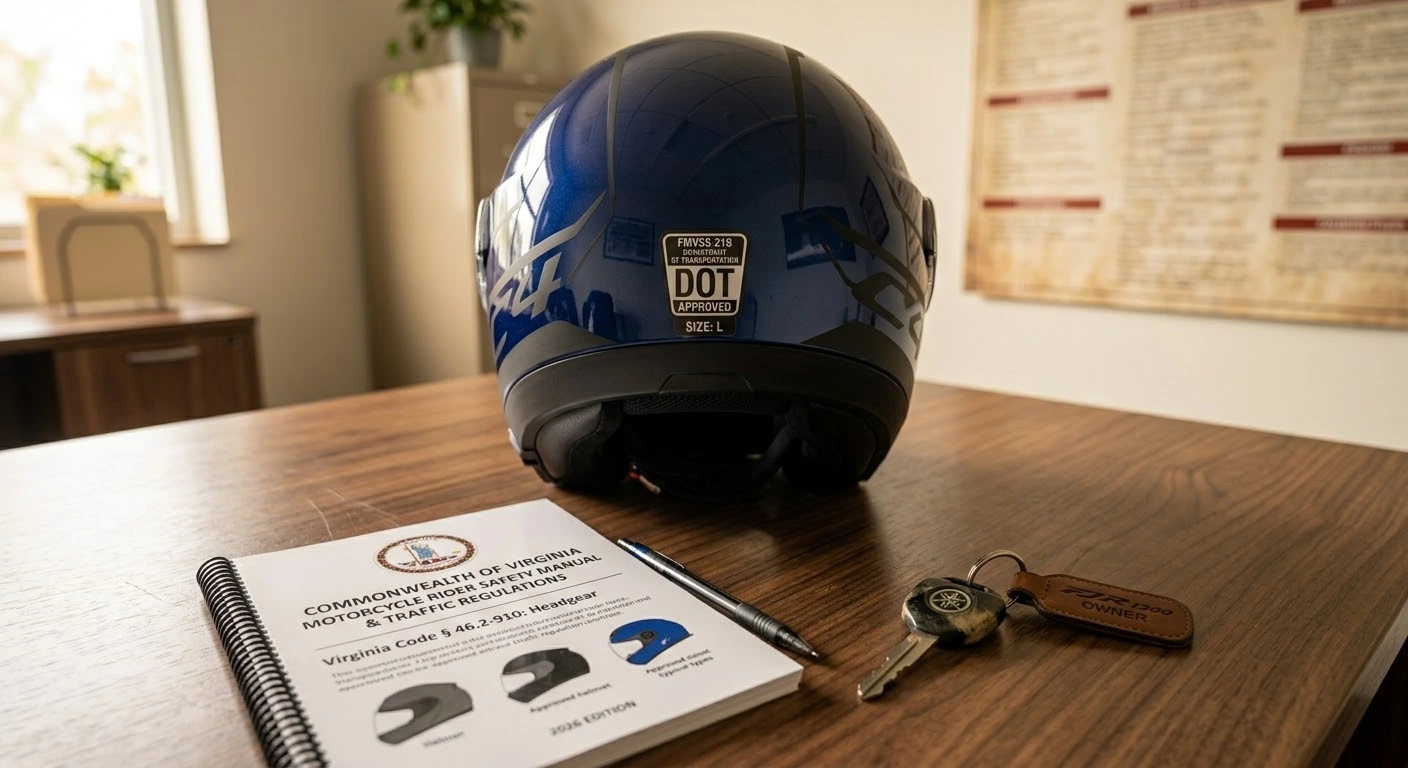
Riding through the Commonwealth of Virginia requires more than just mechanical readiness and route planning; it demands a clear understanding of state traffic codes. Staying current with Virginia motorcycle laws 2026 helmets lane splitting and regulations ensures your rides remain safe, legal, and free from costly traffic citations. Whether you are navigating urban commutes in Northern Virginia or taking long tours across rural passes, adhering to helmet requirements, equipment rules, and road positioning guidelines is essential for every rider.
Mandatory Helmet & Protective Equipment Laws
Virginia maintains strict safety standards regarding rider gear and motorcycle equipment under state law (Code of Virginia § 46.2-910):
- Universal Helmet Law: All motorcycle operators and passengers in Virginia are legally required to wear a helmet approved by the Department of Transportation (DOT), Snell Memorial Foundation, or ANSI. Helmets must feature proper labeling and chinstraps secured while moving.
- Eye Protection Requirements: If your motorcycle is not equipped with an approved safety windshield, you must wear face shields, safety glasses, or shatterproof goggles.
- Required Vehicle Equipment: To pass state inspection, your motorcycle must feature at least one operating headlight, a rear taillight, a brake light visible from 500 feet, turn signals (if originally equipped), rear-view mirrors, a horn, and a functioning exhaust muffler without cutouts.
- Passenger Regulations: Passengers must have dedicated footrests and a permanent, firmly attached seat behind the operator or in a sidecar.
Lane Splitting, Filtering, and Road Positioning Regulations
Road positioning rules directly impact traffic flow and rider safety across Virginia highways:
- Lane Splitting is Illegal: Passing vehicles in the same lane or riding between moving traffic lanes (lane splitting) remains strictly illegal in Virginia under § 46.2-857. Violations are enforced as reckless driving infractions in certain contexts.
- Lane Filtering Status: While neighboring states continue testing low-speed lane filtering at red lights, Virginia law strictly prohibits riding between stopped or slow-moving vehicles. Riders must remain in single-file traffic positions within their designated lane.
- Full Lane Use & Two-Abreast Riding: Motorcycles are entitled to the full width of a travel lane. Two riders may legally travel side-by-side (two-abreast) in a single lane, provided both operators consent.
- Traffic Signal Override Law (§ 46.2-833): If a red light fails to detect a motorcycle due to sensor size limitations after waiting two complete minutes (or 120 seconds), the operator may proceed cautiously through the intersection after yielding right-of-way.
Before setting out on long highway tours across state lines, ensure your motorcycle is mechanically sound and fully prepped by following our guide on how to prepare your motorcycle for long-distance touring.
Understanding and respecting Virginia motorcycle laws 2026 helmets lane splitting and regulations allows you to enjoy the state’s scenic roads with full peace of mind. By keeping your bike inspected, wearing compliant gear, and observing lane positioning rules, you contribute to a safe riding community across the Commonwealth.
Legal Disclaimer: This article is strictly for educational and informational purposes and does not constitute formal legal advice. Traffic laws and municipal ordinances change. Always consult the official Code of Virginia or legal counsel for specific legal interpretations.
Official & Credible Sources
- Code of Virginia (§ 46.2 Motor Vehicles): https://law.lis.virginia.gov
- Virginia Department of Motor Vehicles (DMV Motorcycle Guide): https://www.dmv.virginia.gov
- Virginia State Police Inspection Standards: https://vsp.virginia.gov
Leave a Reply